Microsoft Research Unveils Lens: Efficient Image Generator Using 800M Detailed Captions
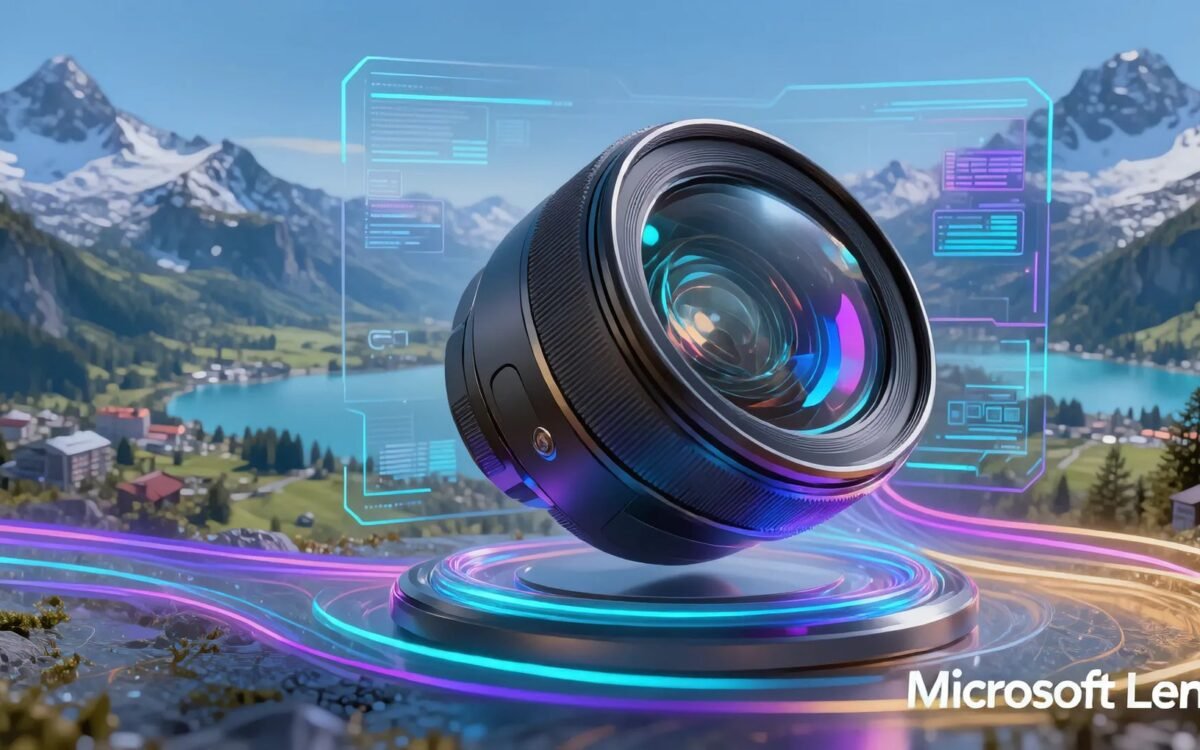
Microsoft Research presents Lens, a text-to-image model with just 3.8 billion parameters that matches much larger rivals on benchmarks, at a fraction of the training cost. The secret sauce: 800 million detailed image captions generated by GPT-4.1 instead of vague web alt-text.
According to the technical report, Lens needs roughly one-fifth the compute that comparable models like Z-Image require for pre-training. It beats models many times its size across several benchmarks. Hunyuan-Image-3.0, for example, has about 80 billion parameters. Lens has just 3.8 billion. The researchers credit the efficiency gains to a more compact model, more usable information per training step, and a training process that converges with fewer passes. The Lens-800M dataset sits at the center of this approach: 800 million image-text pairs with captions generated by GPT-4.1. At an average of roughly 100 words, these captions are far more detailed than standard alt-text scraped from the web. An ablation study shows that training with these long descriptions produces clearly better results than short or mixed captions, according to Microsoft. Web alt-text is often vague or flat-out wrong, which dilutes the learning signal. The team also mixes different resolutions and aspect ratios—portrait through landscape—in each training batch. Even though the model was trained on a fixed set of image sizes, it generalizes to unseen formats and resolutions up to about two megapixels, the researchers say. That saves costly training runs on high-resolution data. For the architecture, the team tested several variants of variational autoencoders, which handle the translation between pixels and a compressed image space. Rather than relying on standard reconstruction metrics, Microsoft tested candidates directly in text-to-image training. The semantic VAE from FLUX.2 performed best and also sped up convergence.