When expressive humanoid robots are awkward, people become wary – new brain study
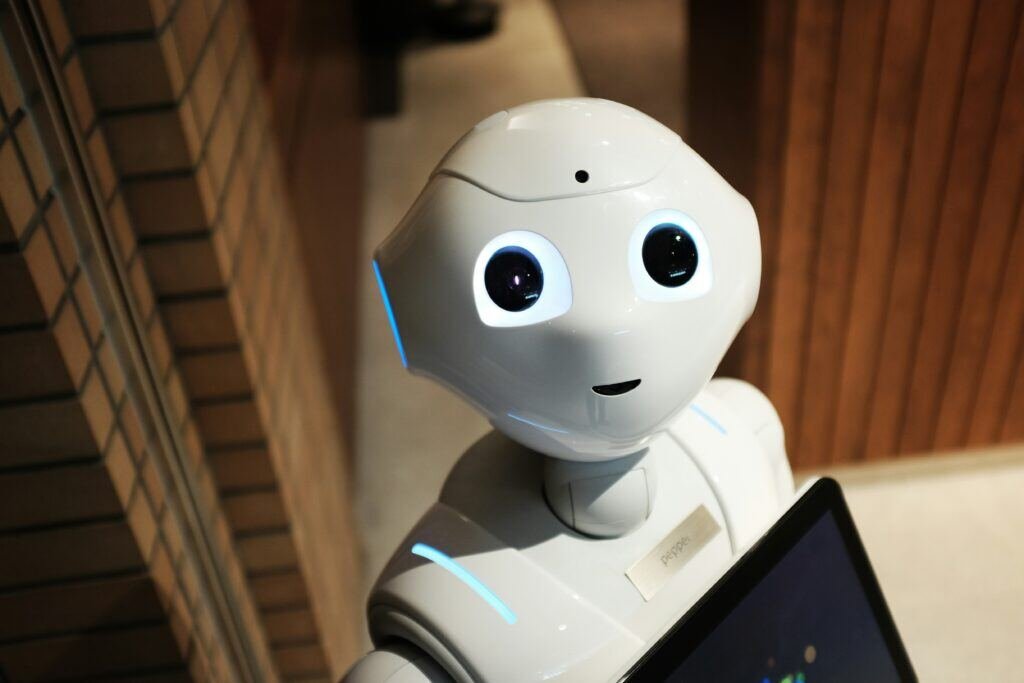
RoboHub News — photo by Alex Knight on Unsplash. By Hasan Ayaz, Drexel University; Ewart J.
de Visser, United States Air Force Academy; Frank Krueger, George Mason University, and Yigit Topoglu, United States Air Force Academy People become more suspicious of a humanoid robot that makes errors, especially when the robot is an expressive conversation partner. In our new study published in the journal Science Robotics, we had 50 people hold conversations and make joint decisions with the commercial humanoid robot Pepper, which is designed to be expressive and recognize emotions. Sometimes we had the robot give sound advice. Sometimes we had it make conversational mistakes, interrupting people or pushing illogical suggestions. For some participants, the robot was animated, using gestures, eye contact and nods. For others, it stayed motionless. We measured four things: brain activity, levels of the hormone oxytocin, self-reported trust and our observations of the robot’s influence on participants’ decisions. We found that when people interacted with an expressive robot that violated interaction norms, their oxytocin levels increased. Oxytocin is popularly known as the “love hormone” for its role in social bonding, so the straightforward prediction is that it declines when a partner disappoints you. Instead, the higher a person’s oxytocin during an expressive robot’s errors, the less they trusted the robot and the less often they took its advice. It turns out that the hormone was tracking with suspicion, not affection. Errors damaged trust and diminished influence whether or not the robot was expressive. What expressiveness in the robot changed in participants was how their brains handled the moment. Reading someone’s brain during a real conversation is hard because the conventional method requires lying motionless inside an MRI scanner. Instead, we used functional near-infrared spectroscopy, a portable sensor worn on the forehead that tracks oxygen levels in the brain while people move and talk normally.