Canonical Evolution of Enterprise Open Source RISC-V at Hot Chips 2026
ServeTheHome — canonical presented the Evolution of Enterprise Open Source RISC-V at Hot Chips 2026. Gordan Markuš, Canonical’s Director of Silicon Alliances, walked through how Ubuntu is built, how ISA support is managed across architectures, and what it will take to make RISC-V enterprise-ready.
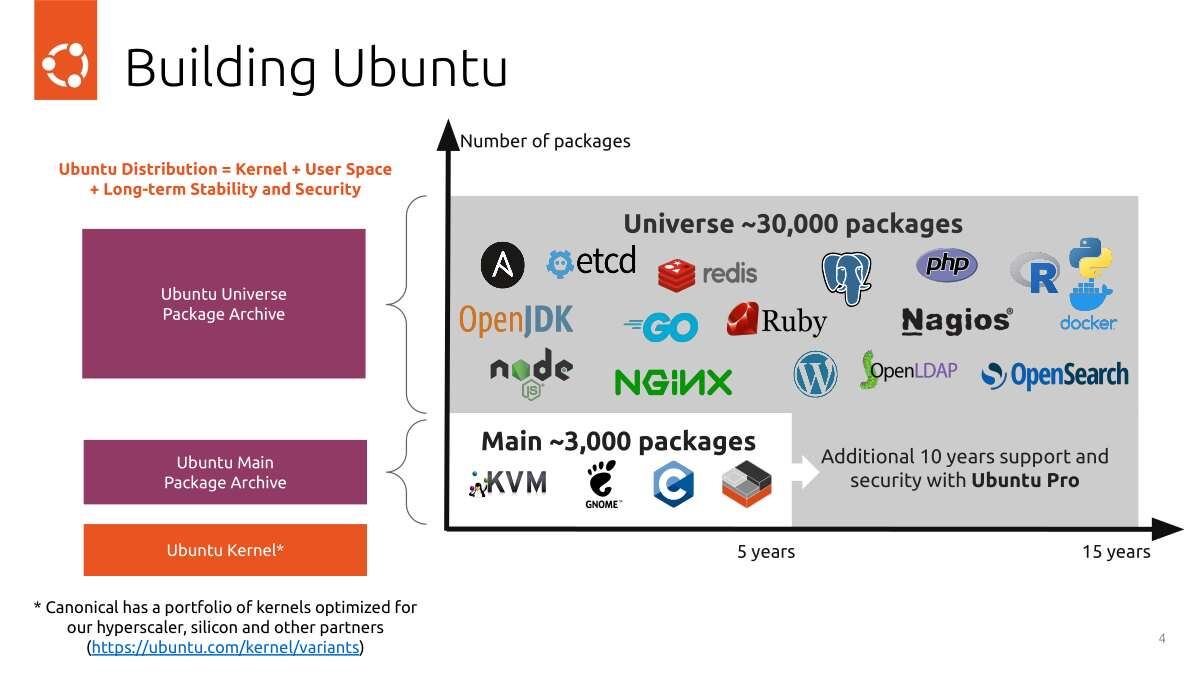
We did this one live like our other Hot Chips coverage, but are publishing it a bit later around a cluster of RISC-V pieces. Canonical Evolution of Enterprise Open Source RISC-V at Hot Chips 2026 Canonical’s underlying argument is that an Ubuntu system should behave like an Ubuntu system no matter what processor drives it. Its presentation builds from how Ubuntu packages are assembled and supported, then applies that model to RISC-V. Ubuntu is assembled from a kernel and user space that Canonical commits to supporting for years. This Universe package archive contains roughly 30,000 packages, while the smaller Main archive contains about 3,000 packages and offers a longer support window, up to 15 years with Ubuntu Pro. Canonical also maintains a portfolio of kernels tuned for hyperscaler and silicon partners, which matters for RISC-V because there is no single reference design. The core aim is for an Ubuntu system to always behave like an Ubuntu system, regardless of the ISA or platform. Canonical says its work is not done until it can long-term patch and maintain the released binary aggregation and deliver a unified Ubuntu experience, meaning every new architecture has to flow through the same release and maintenance cycle. Packages are built for each supported architecture, and each architecture gets a baseline, the oldest or least capable ISA and extension set that can run Ubuntu of that generation. Canonical provides server resources for building and distributing packages and maintains a core development team responsible for their upkeep. RISC-V may sound exotic, but Ubuntu supports not only Arm and x86 CPUs but also IBM POWER and Z mainframes. Canonical shows where each architecture baseline sits today. This amd64 target assumes the original 64-bit AMD and Intel CPUs, while arm64 uses an ARMv8-A baseline with VFPv4 and NEON. This RISC-V riscv64 target moved from the RVA20 profile to the RVA23 profile with Ubuntu 25.10. Beyond baselines, Ubuntu 25.10 introduced architecture variants, allowing packages to be built more than once, each targeting different CPU features.