Physical AI Takes the Wheel: How the World’s Robotaxi Leaders Are Building With NVIDIA Technologies
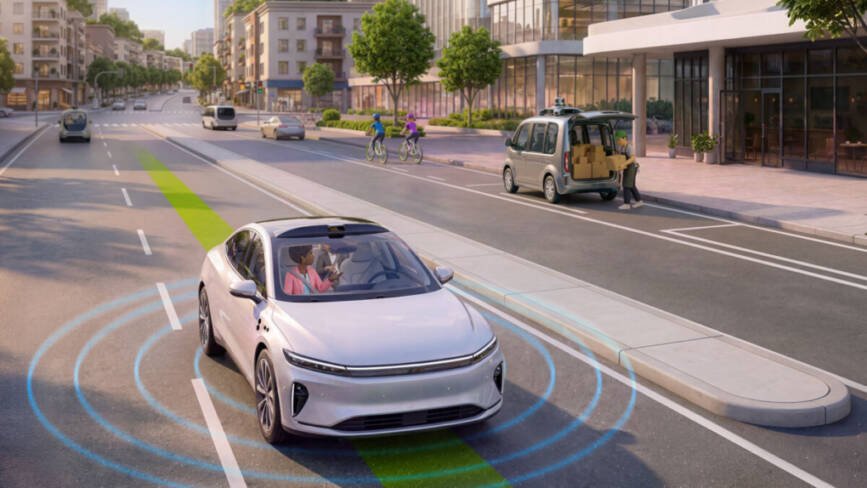
NVIDIA Corp. — the global robotaxi market — physical AI’s first commercial breakthrough — is projected to reach $400 billion by 2035, with over 6 million commercial vehicles in operation as driverless fleets are already moving people through some of the world’s busiest and most complex streets. Deploying a driverless vehicle is one challenge.
Scaling a fleet is a next-level computing challenge; it means delivering the same safe, reliable performance across thousands of vehicles. Meeting those demands requires enormous amounts of compute across the robotaxi development lifecycle, from preparing and training AI models to simulating and validating driving behavior, as well as real-time processing in the vehicle. NVIDIA provides an open platform for AI training, simulation and safety validation, with libraries, software development kits, workflows and models that developers can use alongside their own technology stacks. Every major robotaxi program operating at commercial scale today is running on NVIDIA’s modular stack, spanning AI training, simulation, in-vehicle computing — or a combination of the three — to develop and deploy fleets at scale. What Is a Robotaxi Technology Stack? A robotaxi technology stack is the end-to-end set of technologies used to develop, validate and deploy autonomous vehicles (AVs) — from data and AI model training to simulation, safety validation and real-time in-vehicle computing. NVIDIA’s robotaxi and AV platform brings these capabilities together in a three-computer solution: the model training computer, simulation and validation computer, and in-vehicle computer. 1. Training Computer: NVIDIA DGX Robotaxi intelligence advances as programs turn growing volumes of fleet data into increasingly capable models. Driving models can be trained on NVIDIA DGX systems. The NVIDIA Alpamayo portfolio of open reasoning vision language action (VLA) models, simulation frameworks and physical AI datasets gives developers building blocks they can adapt to their own data, requirements and technology stacks. Its reasoning models help address long-tail AV challenges by breaking complex driving situations into smaller steps, reasoning through each one and selecting the safest trajectory. NVIDIA also provides physical AI datasets, reinforcement learning blueprints and recipes for post-training and distillation, helping developers optimize models for their target vehicles. On a challenging autonomous driving evaluation, adding meta-action and chain-of-thought reasoning data improved a VLA model’s trajectory prediction accuracy, reducing minimum average displacement error — the predicted path’s average deviation from the reference route — by 43%, from 2.08 to 1.18. 2. Simulation and Validation Computer: NVIDIA Omniverse and Cosmos on NVIDIA RTX PRO Robotaxi programs can’t rely on physical miles alone to capture rare, long-tail driving scenarios. NVIDIA Omniverse NuRec models reconstruct real-world driving scenarios from sensor data, while NVIDIA Cosmos world foundation models generate physically based variations of them, enabling developers to turn thousands of real-world corner cases into millions of combinations of driving behavior, traffic, weather, lighting and sensor conditions. From real-world corner cases to thousands of synthetic permutations spanning behavior and content, NVIDIA Cosmos variations expand AV training data and accelerate model deployment. Running on NVIDIA RTX PRO Servers, NVIDIA Omniverse and Cosmos support closed-loop simulation and validation. The NVIDIA AlpaSim simulation framework extends the workflow for training and evaluating reasoning-based autonomous-driving models, helping developers identify weaknesses before deployment. 3.