Windows for robots: Edge AI expands usability
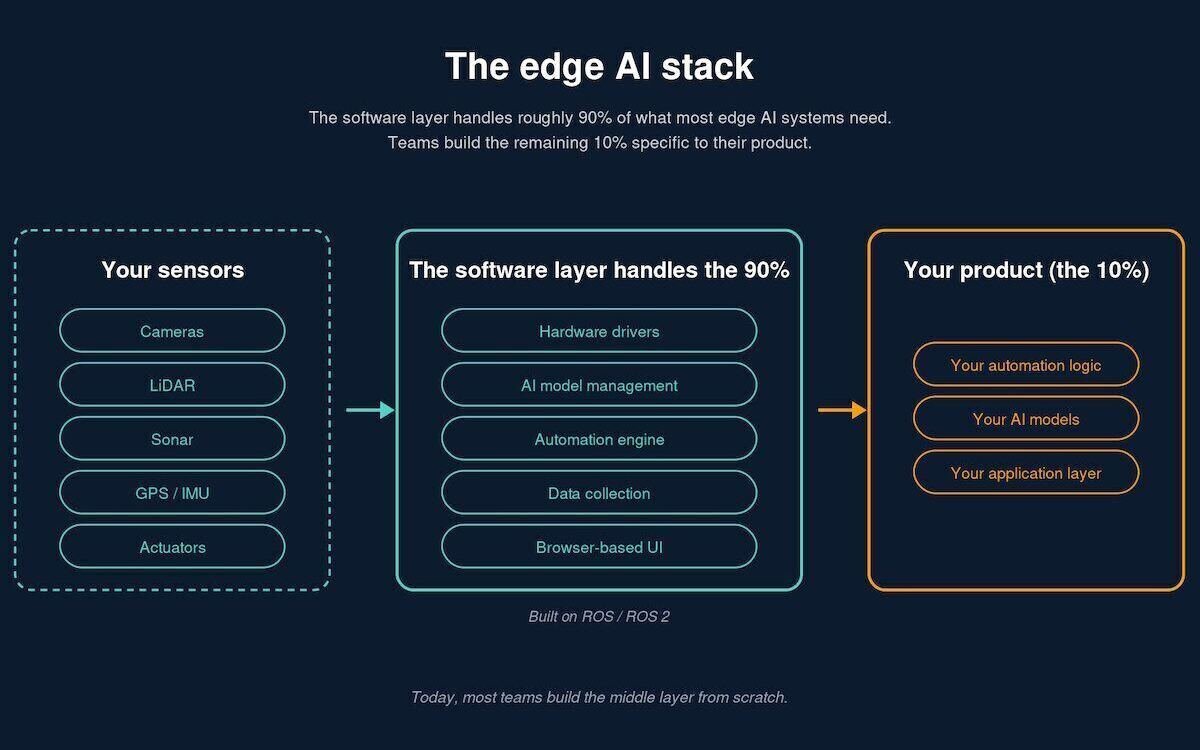
NVIDIA Corp. — edge AI software layer diagram.
Windows changed that by giving everyone a user interface, built-in apps, and plug-and-play hardware capabilities that all worked together. The same shift is now arriving for robots. I remember when the first PCs came out. I was just starting college to become a robotics engineer, and I was excited. PCs were powerful machines. Microprocessors were faster than anything most people had touched, and the capabilities they offered for solving mathematical problems and running complex engineering processes in minutes was exciting. But at the time, the usefulness of PCs was limited to a small group of people who had the skills and interest to learn how to use them. To make a PC do something, you had to know how to work with command-line only operating system interfaces, learn complex hardware protocols, and write software from scratch. Like most of my friends and family at the time, the world looked at a PC and saw an expensive box that did not do much for them. That all changed when Windows hit the market and turned PCs from a niche engineering tool into a device usable by anyone in the world. Today, there is a new and rapidly growing market of edge AI processors, embedded processors that run AI models in robotic and other automated systems from companies like NVIDIA, AMD, Qualcomm, Hailo, and others. These chips allow systems to rapidly analyze camera and other data and make split-second control decisions without needing to be connected to the internet. They are fast enough, cheap, and power-efficient enough to run real AI workloads in the field. The hardware is past the inflection point. But the people who can actually use these processors are still a small group.