Can we trust LLMs to judge whether a research idea is novel?
Today we’re releasing Old Ideas, Novel Problems, a new study of how reliably large language models can evaluate the novelty of scientific research ideas. Alongside the paper, we’re publishing a benchmark, data, and code for testing novelty judges, plus an automated pipeline researchers can use to build new evaluation sets.
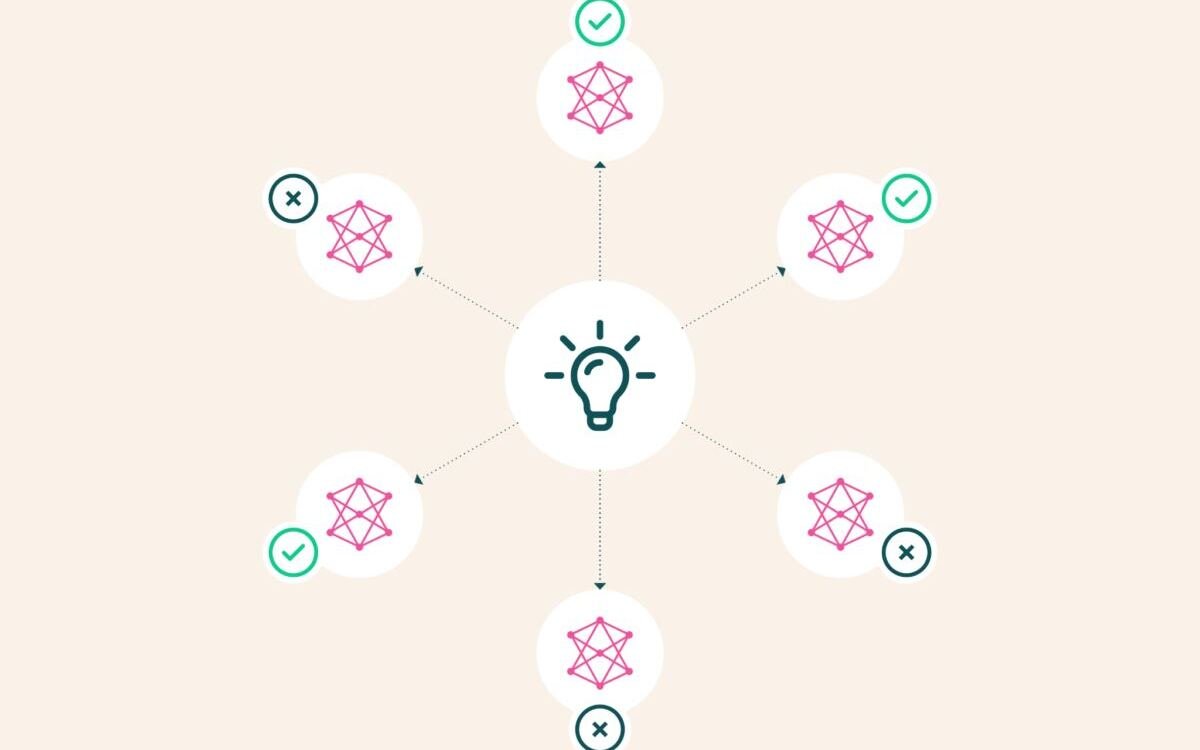
At Ai2, we’ve been developing AI systems that support different parts of scientific discovery. DataVoyager helps researchers explore and analyze structured data, AutoDiscovery generates and tests hypotheses, and Theorizer synthesizes evidence across large bodies of literature into candidate scientific theories. Together with Asta, these projects point toward systems that can help researchers move from understanding prior work to proposing, testing, and refining new ideas. But generating research ideas is only part of the challenge of automating scientific discovery. Those ideas also need to contribute something genuinely new, which means these systems need a way to distinguish a novel direction from one that mostly repackages existing work. That judgment is often handed to another LLM—what we call a novelty judge. Novelty judges assess whether a research idea is new relative to prior work, either on its own or in comparison with another idea. There’s no standard way to build one; research teams choose a model, prompt, evaluation format, reasoning budget, and sometimes a literature-retrieval system. Those choices can materially affect the verdict. Yet these judges are often validated only on human-written papers rather than the AI-generated ideas they are actually meant to evaluate. Our new benchmark results suggest novelty evaluation itself is far from reliable. Across six LLM judges – GPT-5.1, GPT-5.2, GPT-5.4, Claude Sonnet 4.5, Claude Opus 4.5, and Claude Opus 4.6 – seemingly small changes to the evaluation setup produce dramatically different judgments of the same ideas. In one experiment, changing just a few words in a prompt shifts a model’s accuracy in identifying which of two ideas is more novel by more than 50 percentage points. Retrieval and additional reasoning do not consistently improve judgments, and two purpose-built novelty evaluation systems perform worse than a simple prompted Claude Opus 4.6 baseline. If AI is going to play a larger role in scientific discovery, we need more dependable ways to tell whether it is actually proposing something new.