Kawasaki Robotics to debut RL030N physical AI platform at Automate
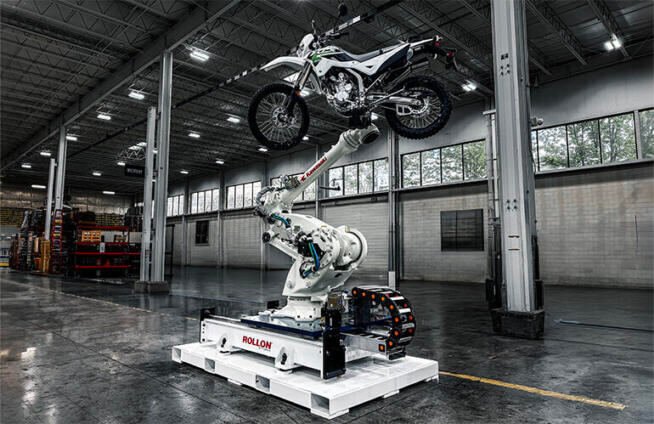
The Robot Report — kawasaki will show the MXP360L robot for heavy-duty material handling in Chicago.
The company said they will show how robotics, artificial intelligence, machine learning, vision systems, and real-time control are transforming industrial automation. “At Kawasaki Robotics, we believe the future of automation will be defined by robotic systems that seamlessly integrate perception, motion, and decision-making,” stated Seiji Amazawa, president of, Kawasaki Robotics. “Automate 2026 marks an important milestone as we introduce technologies designed to support emerging physical AI applications while continuing to deliver the industrial reliability manufacturers depend on.” Since 1969, Kawasaki Robotics has supplied industrial automation and robotics for a range of sectors and applications. The Tokyo-based company said it continues to innovate in physical AI, intelligent inspection, collaborative robotics, controllers, and autonomous systems. “We’re a global manufacturer of vehicles, from planes and trains to recreational vehicles, so we’re more focused on outcomes than the latest AI platform or humanoid,” said Paul Marcovecchio, director of general industries at Kawasaki Robotics. “Our tried-and-true robots build millions of products a year, so we take a realistic approach to the transition to AI and full automation.” At Booth S-2201 in Chicago’s McCormick Place, Kawasaki will show its new RL030N eight degree-of- freedom (DoF) platform designed for physical AI applications. It will also demonstrate its patented Pulseboard inspection technology. In addition, Kawasaki will introduce the MXP360L and BA013L industrial robots. The company said its booth will showcase systems for advanced motion control and flexible manufacturing. RL030N built for manipulation in confined spaces Kawasaki Robotics, whose U.S. headquarters are in Wixom, Mich., claimed that the RL030N combines high-speed motion, enhanced dexterity, lightweight construction, and real-time external orchestration capabilities for dynamic and confined environments. “Startups were really good at developing the motion-planning software, but traditional robots didn’t have the dexterity or had latency,” Marcovecchio told The Robot Report. “We’re bridging the gap between traditional robotics programming and the dexterity needed for physical AI.” The RL030N is designed to support AI-driven applications. Its additional articulation axis offers greater dexterity and flexibility than traditional six-axis robots, the company asserted.