Defense manufacturing readiness hinges on autonomous finishing, says GrayMatter Robotics
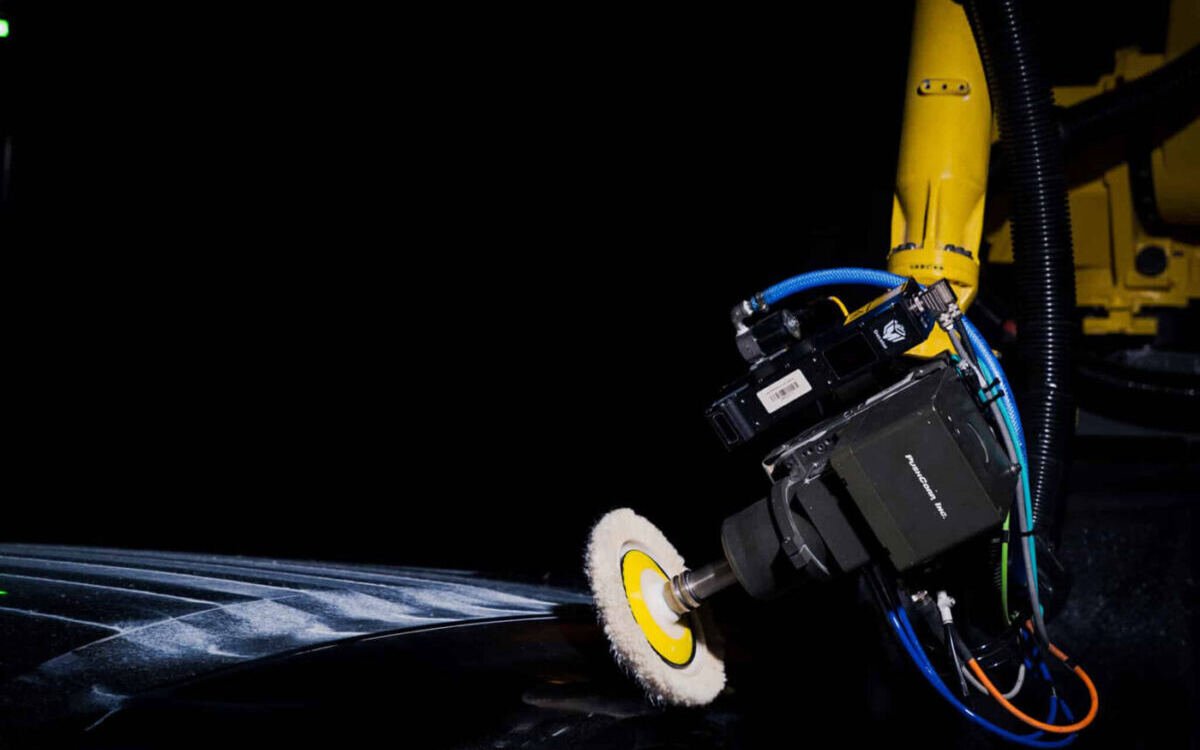
The Robot Report — grayMatter Robotics uses its Factory SuperIntelligence AI architecture across industries, environments, materials, geometries, and applications. | GrayMatter Robotics said that its autonomous surface-finishing systems represent one structural response to the trades shortage driving that attrition.
According to the Government Accountability Office’s (GAO) March 2025 military readiness report, the U.S. military missed its aircraft readiness goals on 42 of 45 fleets in 2024, largely due to a shortage of trained maintenance workers. Surface preparation and finishing work that precedes depot-level repair sits on the critical path of those workflows. With the U.S. Navy’s 2024 industrial base review identifying a 174,000-worker shortfall, the readiness shortage is an industrial-capacity problem. “Depot facilities have requirements that most automation platforms weren’t designed around: no external data routing, no reprogram cycles between parts, and full traceability on every surface the system touches,” said Ariyan Kabir, co-founder and CEO of GrayMatter Robotics. “Our edge-deployed physical AI architecture was built around those constraints from Day 1.” Aging depot workforce creates surface preparation bottleneck Depot-level maintenance is specialized work in the defense industrial base, said GrayMatter Robotics. A technician overhauling fighter aircraft landing gear or preparing naval vessel surfaces for protective coatings has spent considerable time acquiring that expertise. For many technicians in the field, apprenticeship began early in life, and those same workers may now be reaching retirement age across major defense depots. Because it takes four to six months to train new hires before they acquire proficiency, the current personnel pipelines cannot replace them at the rate they are leaving, said the Carson, Calif.-based company.