Building robots for unpredictable, infrastructure-free environments
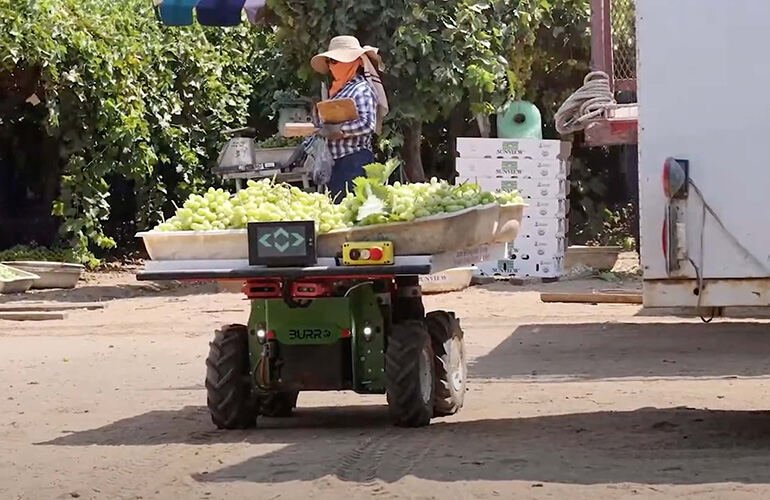
Burros can carry, tow, scout, patrol, mow, push, pull, or propel a variety of attachments as a platform for manipulation. | The robot worked.
We were excited. We thought we understood the problem. We did not understand the problem. What we understood was how to make a robot perform in conditions we controlled, for an audience prepared to see it succeed, over a time horizon short enough that the long tail of real-world failures hadn’t had time to appear. That is what a demo is. It is a proof of concept for a best-case scenario. It is not a proof of concept for Tuesday morning in November when it’s raining, and the lighting is flat, and a worker approaches from an unexpected angle, and the robot is operating in a country it has never been to before. The gap between those two things is where most robotics companies fail. Not because their technology is bad, but because they optimized for the wrong thing for too long. They kept the demo alive while the real-world deployment problem went unsolved. Turning a demo into a product Burro made a different choice, though not because we were smarter. We made it because we had no alternative. The environments we were working in, outdoor agricultural settings with no fixed infrastructure, no controlled lighting, and no GPS reliability under canopy. The agricultural workforce was not going to modify its behavior to accommodate a machine. All of these did not permit the kind of controlled-conditions optimization that indoor robotics can sustain for years before hitting the real world.