Local AI clustering with Dell’s Pro Max GB10 — connecting two Nvidia Grace Blackwell to scale out AI compute at home
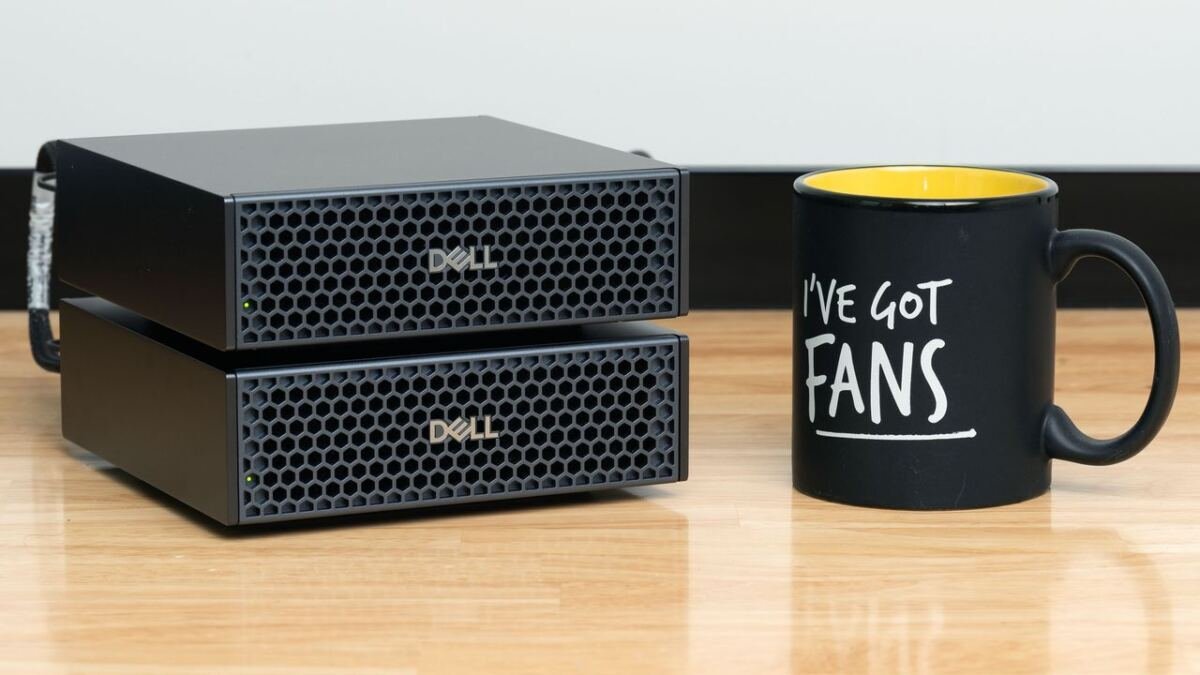
Dell has introduced its Pro Max GB10 systems, priced at $6,332 each, enabling local AI enthusiasts to create powerful computing clusters using Nvidia’s Grace Blackwell architecture, significantly reducing the cost and complexity of high-performance AI setups.
In a recent testing phase, Dell’s Pro Max GB10 systems have demonstrated the potential for local AI clustering, particularly for large language models that require substantial memory. Each unit is equipped with 128GB of unified memory, allowing users to combine two systems to achieve a total of 256GB. This configuration facilitates the distribution of advanced AI models that would otherwise exceed the capacity of a single machine, providing a more accessible entry point into high-performance AI computing for those who cannot afford traditional, more cumbersome GPU server setups.
The Pro Max systems leverage Nvidia’s advanced networking capabilities, specifically Remote Direct Memory Access over Converged Ethernet (RoCE), to connect multiple GB10 units seamlessly. This feature is crucial for scaling out AI workloads effectively, as it allows for high-speed data transfer between systems, mimicking the performance of larger data center environments. While the initial investment remains significant, the cost-effectiveness of this approach becomes evident when compared to the price of multiple high-end GPUs, which can easily exceed $20,000.
Despite the advantages, potential buyers should be aware of the limitations. The Pro Max GB10 systems, while powerful, do not support Infiniband connections, which may restrict some users who have existing infrastructure. Additionally, the reliance on Ethernet for clustering could pose challenges in terms of latency and bandwidth for particularly demanding AI applications.
Nevertheless, for local AI enthusiasts looking to experiment with large models without the overhead of traditional GPU servers, the Dell Pro Max GB10 presents a compelling option in the evolving landscape of AI computing. As the demand for AI capabilities continues to grow, Dell’s introduction of the Pro Max GB10 systems represents a significant step toward democratizing access to advanced AI technologies.
By offering a more compact and cost-effective solution, Dell is positioning itself to attract a wider audience, from individual developers to small businesses eager to harness the power of AI without the prohibitive costs associated with traditional setups. This shift could foster innovation and experimentation in the AI field, as more users gain the ability to work with sophisticated models in their own environments.
Looking ahead, Dell’s Pro Max GB10 systems may inspire competitors to develop similar products that cater to the burgeoning local AI market. As companies explore ways to optimize performance while minimizing costs, the landscape of AI computing could see a transformation that emphasizes accessibility and efficiency, ultimately benefiting a diverse range of users and applications.
Why it matters: The introduction of Dell's Pro Max GB10 systems marks a pivotal moment for local AI computing, providing a more affordable and efficient pathway for enthusiasts and small businesses. This development not only lowers the barrier to entry for advanced AI experimentation but also encourages innovation in the field. As more users adopt these systems, we can expect to see a surge in creative applications and solutions that leverage AI technology in novel ways.
Original reporting: Tom's Hardware