Pressure-free growing robots for soft medical robotics
RoboHub News — researchers at the University of Leeds and collaborators from the University of California San Diego won the Best Paper Award at RoboSoft, the leading international conference focused on soft robotics research. Soft robotics is gaining attention in medical applications because compliant machines can interact more safely with delicate objects and complex anatomy.
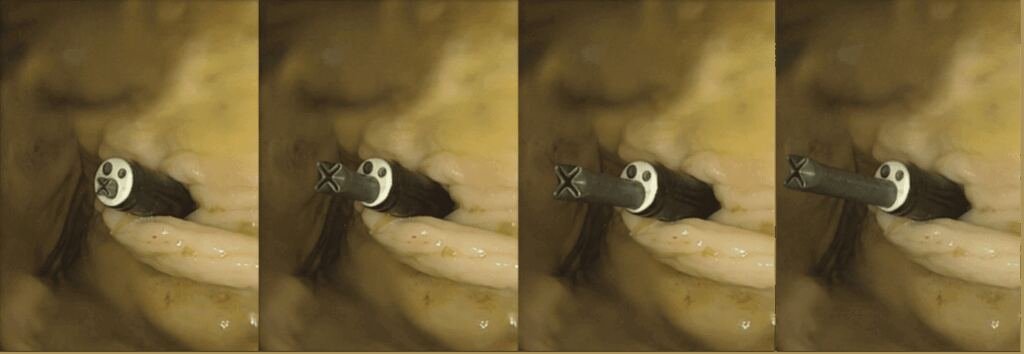
The award-winning paper describes a 1.8 mm soft growing robot that can be steered magnetically, sense its own shape in real time, and operate without internal pressure. These advances could help improve patient outcomes following minimally invasive procedures. We spoke with lead author Benjamin Calmé about the team’s work. Q: Congratulations to you and your team on winning the award. Before we get into the paper itself, could you tell readers a little about yourself and how you arrived in this field? Benjamin Calmé: My path into robotics is a bit unusual. I’m from France and I actually started with a medical degree. Over time I realized I was more interested in research than in day‑to‑day clinical practice. In France, if you want a research and teaching career in medicine, you’re expected to get an equivalent engineering degree as well. That’s what pushed me toward engineering—and from there into robotics. That led me into robotics labs in Paris and Strasbourg, where I worked on medical robotic platforms for applications such as needle insertion inside MRI scanners and technologies to help runners reduce injury risk. Through those projects I fell in love with robotics. Staying in medical robotics was a natural extension of my previous work. It’s also why I was hired in Leeds. That is, you need someone who can translate between surgeons and engineers.