Anthropic wants to do for physical hardware what its Model Context Protocol did for software
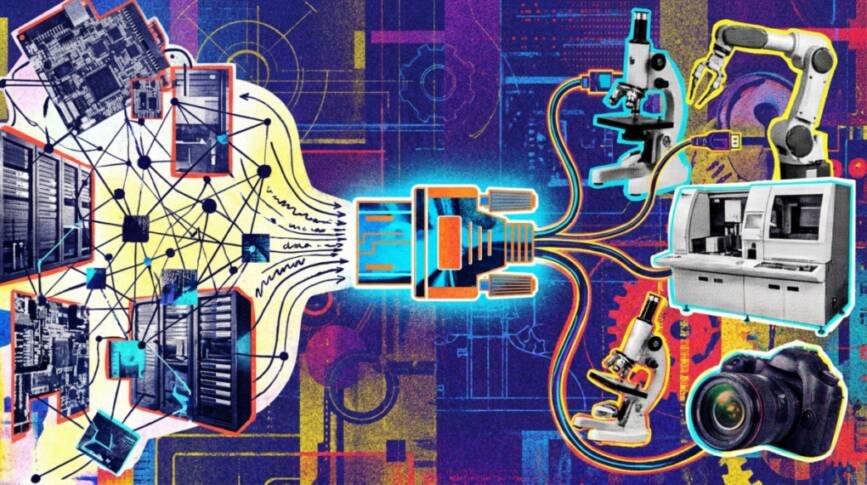
Anthropic’s Model Hardware Standard (MHS) gives AI agents a unified interface to physical devices like microscopes and robotic arms. Early tests in labs and on quantum computers cut integration time dramatically, though Claude still struggled with physical cause and effect.
Devices in research labs and factories often come from different manufacturers, use different APIs, data formats, and control software, and take serious effort to connect. Anthropic wants to tackle this with the Model Hardware Standard (MHS), a spec that lets AI agents read from and control physical hardware. Anthropic says MHS cuts integration time for lab equipment from the typical weeks or months down to hours or minutes. The company developed the spec with the HHMI Janelia Research Campus and is releasing it first as a research preview for select labs and manufacturers, with an open-source release planned later.Ad One driver per device instead of custom integrations The idea builds on a project Anthropic already shipped for software. The Model Context Protocol (MCP) gives AI models a standard way to access external data sources and tools. MHS extends that approach to machines.Ad Each device gets an MHS driver that unifies basic functions like reading and modifying data. The driver makes the device discoverable in a common format and can include details software alone can’t capture, such as a robotic arm’s weight or its safety limits. Users can add this information in natural language, and MHS turns it into a reference file for the agent. An agent can then pick up the capabilities and limits of a device it has never seen before and operate it through a single interface. Someone still has to write a driver for each piece of hardware, but once it exists, it can be reused rather than rebuilt for every combination of device and controller.Ad According to Anthropic, MHS is model-agnostic and works with any device that has a programmable interface. Agents can coordinate multiple devices and save workflows as conventional scripts that then run without a language model. Anthropic tested MHS with several partners. At biotech company Genentech, Claude coordinated a liquid handler, a robotic arm, and a plate reader to automate a protein assay, a test that measures protein concentration. The agent optimized pipetting parameters for different liquids on its own, but ran into trouble when bubbles formed in a viscous solution and caused errors. Claude kept restarting the process in the same vessel with tweaked parameters, which made things worse.