From Atari to EVE Online: Building on 15 Years of AI Research in Games
SIMA 2: An Agent that Plays, Reasons, and Learns With You in Virtual 3D Worlds Our latest AI breakthroughs and updates from the lab Our mission is to build AI responsibly to benefit humanity From Atari to Go to StarCraft, games have driven some of the biggest breakthroughs in AI. Now, we’re partnering with game developers to prototype new gameplay experiences that push the frontiers of both gaming and AI.
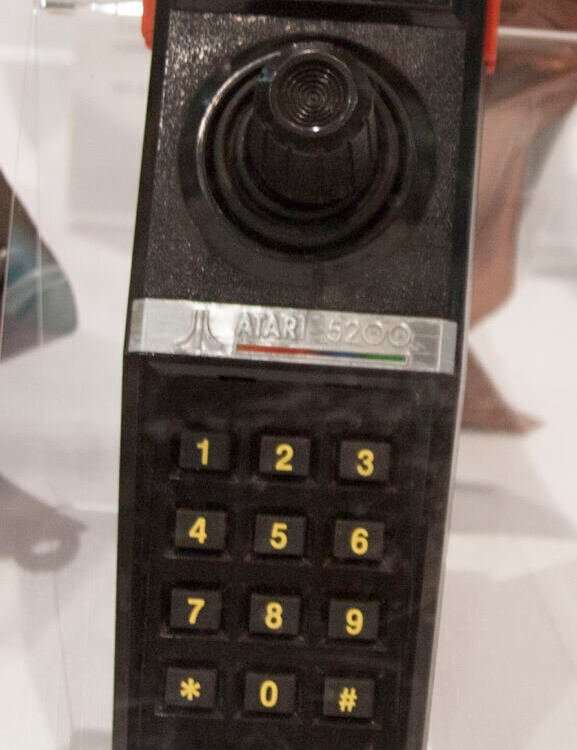
Since DeepMind’s foundation in 2010, the constrained yet rich worlds of games have played a critical role in understanding intelligence. They have driven some of our biggest AI breakthroughs, from mastering Atari to helping solve protein structure prediction – and they are still at the heart of what we do. Gaming is in GDM’s DNA. Demis Hassabis, one of Google DeepMind’s founders, is himself a former game developer, as are many of us in the GDM team. Together, we have decades of hands-on experience in game development and a deep respect for the craft of making games. We’ve always been clear that doing AI research with games requires deep partnership with game developers – like our major new research partnership with Fenris Creations and the EVE Universe that we unveiled earlier this year, and the work we’ve done together with acclaimed studios like Hello Games, Coffee Stain Studios, Foulball Hangover and others. Our journey began when a small team trained a deep neural network to play Atari 2600 games directly from raw pixels. The Deep Q-Network (DQN) learned to play 49 different games — from Pong to Breakout to Space Invaders — without any game-specific engineering. The 2015 Nature paper on DQN helped catalyze the modern era of deep reinforcement learning. From there, we attempted to master more complex games, with each milestone producing more capable and general systems. AlphaGo defeated world champion Go player Lee Sae Dol in 2016 — a feat many experts thought was still a decade away. AlphaGo Zero surpassed every previous version by learning entirely from self-play, with no human data at all. AlphaZero generalized this approach to master chess, shogi, and Go with one algorithm, while MuZero learned to play without even knowing the rules. In 2019, AlphaStar reached Grandmaster level in StarCraft II, navigating real-time complexity and imperfect information. For each game, AI enriched the playing experience.