GitHub availability report: August 2026
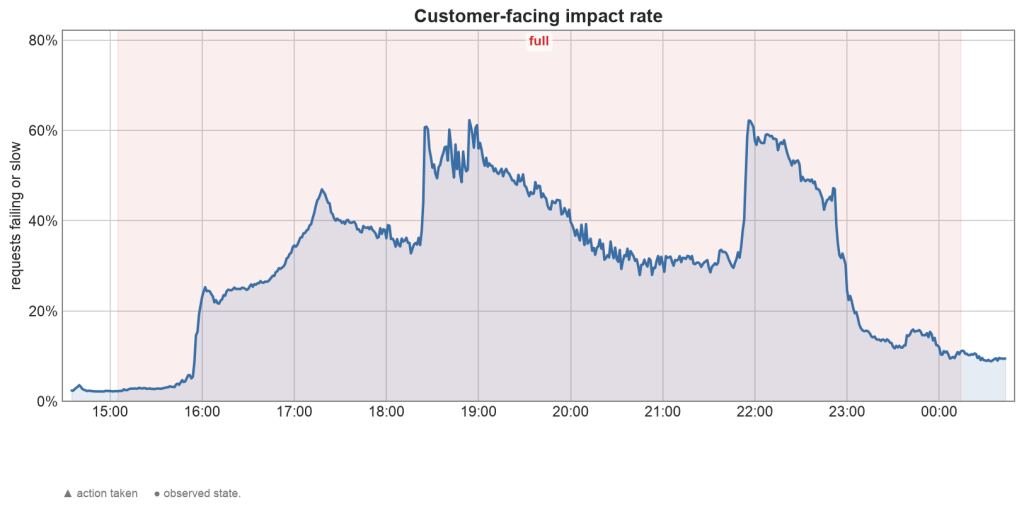
figure — while we continue to make progress, August proved to be a challenging month for availability. You can read more about these incidents in a blog post we published last month.
We are aggressively investing in both architectural improvements and moving to Azure, which will give us more capacity. Meanwhile, we continue to see significant growth on our platform. We are prioritizing the most impactful work while minimizing risk, but as these incidents in August show, we cannot completely eliminate risk. Ultimately, all the work needs to be done, and incidents give us an opportunity to adjust our priorities. As repair items from these incidents, we’ve made significant improvements to our capacity monitoring and management, retry policies that led to bigger impact, and resiliency improvements to core services. We’ve also continued to make great progress across many durable work streams. On August 11, GitHub ran a production MySQL primary from Azure for the first time. Client-observed write impact was minimal, and no customer impact occurred in the transition. We repeated the pattern with two more primaries on August 27. We have further primaries scheduled over the coming weeks, increasing in complexity as we learn from each failover. Read traffic also reached new highs. Reads from migrated services peaked at 60.4%, while reads from GitHub’s monolith peaked at 64.3% in Azure. Git reads reached 54%. Away from the regional migration, the 24-table authentication-core cohort moved off GitHub’s oldest shared database, mysql1, removing approximately one million queries per second from its replicas. Separate query-hygiene changes removed another 120,000 queries per second and eliminated approximately 59,000 seconds of wasted database work per hour.