Gravis Robotics raises $200M for autonomous construction
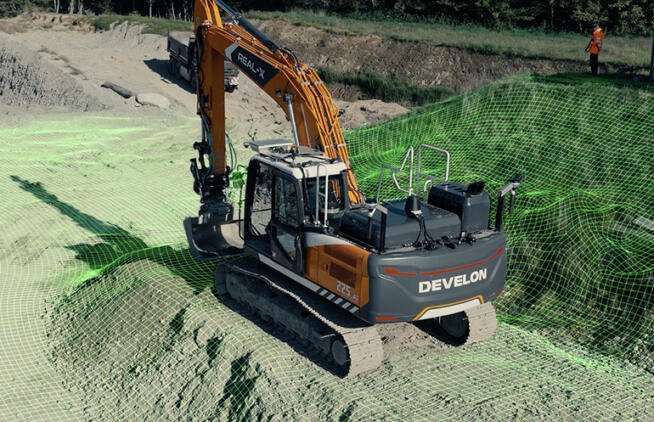
SoftBank — gravis uses environmental sensing to bridge the sim-to-real gap. S.
reshoring and defense needs could change that. Gravis Robotics today announced that SoftBank is investing $200 million in its Series A round, which it claimed is the largest in construction robotics history. “To build the future, we need to change the world, literally,” said Ryan Luke Johns, co-founder and CEO of Gravis Robotics. “Whether we are building housing, modernizing energy grids, or scaling data centers, every project starts with moving earth. That foundational work has been the bottleneck slowing down the entire built environment.” “Our machines are built for the messy, unscripted reality of live jobsites that breaks traditional automation,” he added. “With SoftBank’s backing, we can hire the best builders and engineers, put Gravis-powered autonomy on every major jobsite, and scale faster than anyone thought possible.” Spun out of ETH Zurich in 2022, Gravis said it is bringing “software-defined intelligence to an industry that has relied on purely mechanical hardware for decades.” The Zurich-based company retrofits existing excavators and construction equipment with its Gravis Rack autonomous control kit and software. Register now and save on your pass to RoboBusiness 2026 Gravis Robotics develops physical AI for earthmoving While most physical AI operates in static worlds, such as self-driving car steering around obstacles on fixed pavement without disturbance, construction systems are designed to do the exact opposite, noted Gravis Robotics. It cited the example of an excavator that deliberately reshapes the earth. The company said it addresses this challenge with and models built on simulated experiences and that bridge the “sim-to-real gap.” Gravis said its synthetic training enables it to move billions of cubic yards of virtual material – from soft clay to rock-filled soil – and enables its software “to bring factory-floor precision to historically unpredictable civil jobsites.” “Skilled operators read the earth through subtle physical feedback — listening to the engine strain, sensing the machine vibration and reacting to hydraulic resistance,” stated Dominic Jud, co-founder and chief technology officer of Gravis Robotics. “Our AI takes that same physical input and grounds it in machine telemetry, responding to varying subterranean forces and soil mechanics at microsecond speeds.” “We didn’t try to simplify the world for our software; we gave it the physical intuition to handle real jobsites with precision that goes beyond what any human can feel from inside the cab,” he said. The Gravis Rack provides an operating system for autonomous construction. “Contractors choose machinery based on deep regional service relationships and existing fleet investments – they shouldn’t be forced into a closed, single-brand ecosystem.” Gravis asserted that its AI world model incorporates the performance characteristics of a range of manufacturers’ products rather than imitate an individual operator. The model is thus “generalizable and adaptable in a way single-machine systems can’t match,” it said. The company claimed that the Gravis Rack acts as an operating system for mixed fleets. It has been installed on machinery from Caterpillar, Case, Develon, John Deere, JCB, Hitachi, Sumitomo, Yanmar, Volvo, and more.