Inbolt to discuss physical AI’s deployment problem at RoboBusiness
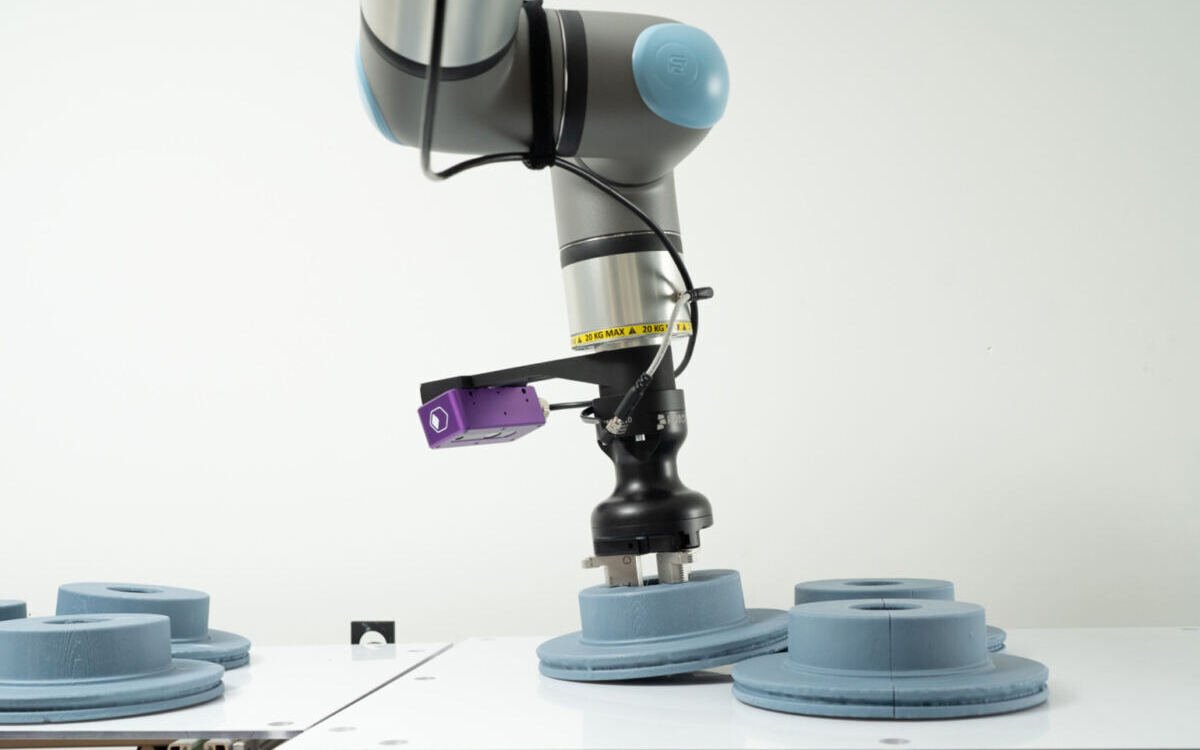
figure — inbolt’s technology lets robots grasp parts however they can, then uses in-hand localization to adjust trajectory mid-move. | More of it, better curated, better simulated.
That’s true in the lab. In the factory, it’s the wrong constraint. After deploying vision-guided control across over 100 factories and 40 million-plus robot cycles, Inbolt CEO Rudy Cohen says the real bottleneck is the loop between perception and motion, and the integration tax surrounding it. At RoboBusiness, which will be on Oct. 20 and 21 in Santa Clara, Calif., Cohen will give the talk, “Physical AI Doesn’t Have a Data Problem; It Has a Deployment Problem.” The talk will take place at 2:15 p.m. on the first day of the show. Cohn will reframe where physical AI actually pays off. Not in bigger models, but in closing the loop at servo frequency and collapsing the months of fixtures, wiring, and returning that make every deployment a six-figure project. Using production data from lines at Stellantis, Toyota, and Ford, Cohen will make the case that physical AI is already commercially proven, just not where the headlines are looking. About the Cohn and Inbolt Rudy Cohen is the co-founder and CEO of Inbolt, a startup bringing vision and AI to robotics in manufacturing. He began his academic journey as a researcher in applied mathematics at École Normale Supérieure Paris-Saclay, before completing a Master’s in entrepreneurship from École Polytechnique and HEC Paris. Inbolt is building a real-time control layer that turns digital twins into live robot execution. Since its founding in 2019, the company has raised €20 million ($23.2 million U.S.) and now operates in over 100 factories across Europe, the U.S., and Japan. Register for RoboBusiness now RoboBusiness 2026 is the leading event for commercial robotics developers. Attendees will gain the latest insights from experts in robotics and AI on cutting-edge research; industry trends; and innovative applications in sectors such as manufacturing, healthcare, agriculture, logistics, and more.