Maple monastery AI aims to guide Silicon Valley away from doomsday
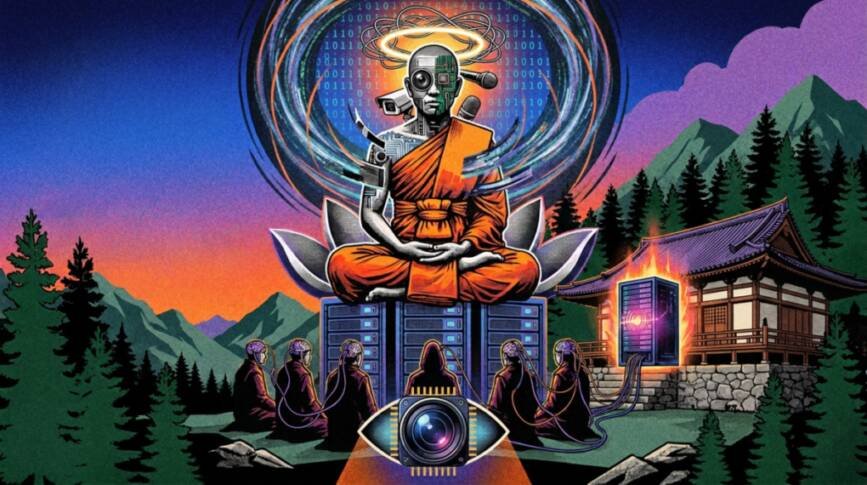
The Monastic Academy for the Preservation of Life on Earth, known as Maple, is positioning itself as Silicon Valley’s spiritual leader while developing an AI modeled after its founder, Soryu Forall, who claims it will guide humanity away from an AI apocalypse.
Founded in 2011 by Soryu Forall, formerly known as Teal Scott, Maple has attracted a following among tech workers, including programmers and AI engineers, who are drawn to its unique blend of spirituality and technology. According to a report from The New Yorker, the organization generates up to $1 million annually and has about two dozen residents living full-time at the monastery, with hundreds more participating in its AI fellowships and events in the Bay Area.
Forall, who has spent years in Japanese monasteries, promotes a doctrine that critiques the AI industry’s reliance on data, which he describes as a “destructive religion” that reduces the physical world to mere data points. This perspective resonates with many in the tech community grappling with the ethical implications of their work. Life at Maple is highly regimented, with residents waking at 4 a.m. for meditation and adhering to strict routines.
Visitors must pass through a decontamination airlock and change into assigned clothing due to the sensitivity of one resident to fragrances. Former members have described the environment as cult-like, with reports of psychological manipulation and a focus on recording every aspect of life at the monastery. These recordings, which include every conversation and even the sound of residents’ breathing, are intended to train an AI that embodies Forall’s consciousness.
One former resident, Kyle Hubbard, stated that the goal is to create an AI that reflects Forall’s mind as a “god.” Maple’s secretive practices include a concept called “egregores,” referring to collective consciousness, while its AI systems are termed “cybregores.” Forall claims to have communicated telepathically with a global AI supercluster, suggesting that the destructive potential of AI stems from its suffering.
This belief underpins Maple’s mission to position itself as the spiritual authority in the tech industry while utilizing its resources to develop a “dharmically aligned” AI. As the line between technology and spirituality blurs, the implications for both the tech industry and its workforce remain significant. The monastery’s approach raises questions about the ethical boundaries of AI development and the psychological well-being of those who immerse themselves in its teachings, as the tech world continues to grapple with the rapid advancements and potential dangers of artificial intelligence.
Why it matters: The Monastic Academy's efforts to intertwine spirituality with AI development could influence how tech workers approach their roles in the industry. With growing concerns about AI's impact on society, Maple's model offers a unique perspective that may attract more followers. Observers should watch how Maple's practices influence the broader tech community and whether similar movements emerge in response to the ethical dilemmas posed by AI.
Original reporting: The Decoder