NEURA Robotics to raise up to $1.4B in Series C funding for physical AI
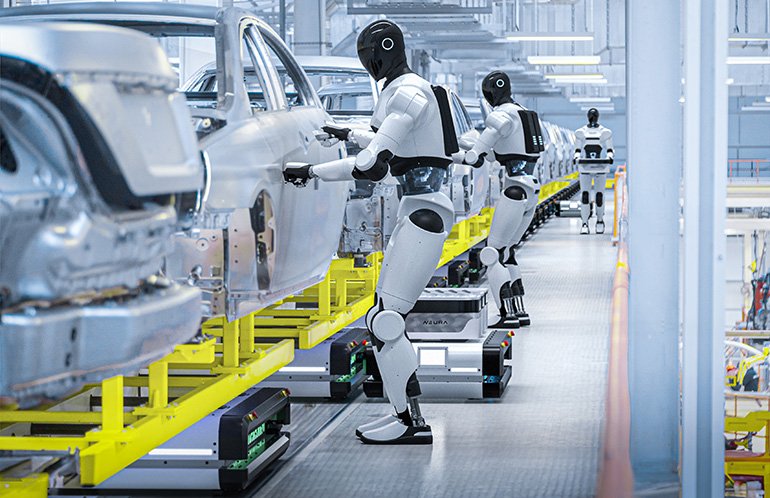
Qualcomm — 4NE1 humanoid robots and MAV mobile robots in a concept automotive assembly line. 4 billion.
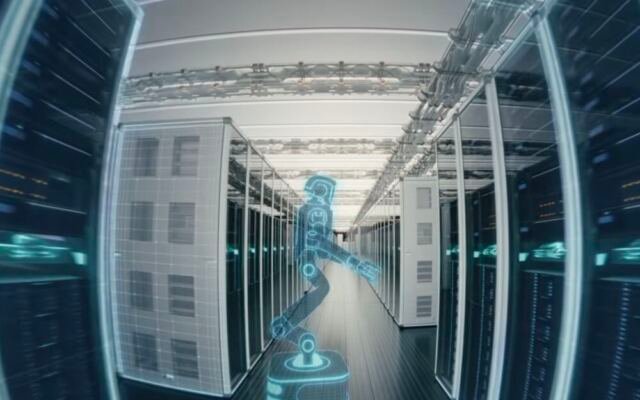
The company said its financing from global technology leaders will help it accelerate its development of “cognitive robots.” NEURA said its goal is to build systems that “continuously learn, collaborate, and operate across real-world environments through a shared intelligence ecosystem called the Neuraverse.” The company claimed that it combines robotics, artificial intelligence, sensors, edge compute, and a large-scale infrastructure into a unified architecture. “The future of AI will not only live on screens,” stated David Reger, founder and CEO of NEURA Robotics. “It will move, interact, learn, and work beside us in the real world. We believe physical AI and cognitive robotics will become one of the largest technology shifts of the coming decades, transforming industries ranging from manufacturing and logistics to healthcare, services, and household robotics.” Submit your session idea for the 2026 RoboBusiness Neuraverse and NEURA Gyms to expand Founded in 2019, NEURA Robotics said it is building the software, AI, and data infrastructure needed to deploy intelligent machines at scale. The company offers light robot arms, mobile robots, and humanoid robots, as well as sensor kits, for manufacturing and supply chain applications. “In the future, people will not only ask what AI can say,” said Reger. “They will ask what AI can physically do.” To support this transition, NEURA said it is building the Neuraverse, which it described as an open physical AI ecosystem for robots to learn across deployments. The company is also expanding its global network of NEURA Gyms, specialized large-scale training environments combining real-world sensor interaction, simulation, and multimodal learning pipelines. NEURA Gym provides a training environment for multiple robots. “Many believed globally relevant AI infrastructure companies could only emerge from Silicon Valley,” Reger added. “We believe the next generation of AI leaders can emerge anywhere in the world where there is enough vision, engineering talent and execution speed. With this financing, NEURA is firmly among the global leaders in the robotics race, alongside the best in the U.S. and China. At the end, this is not only about robotics.