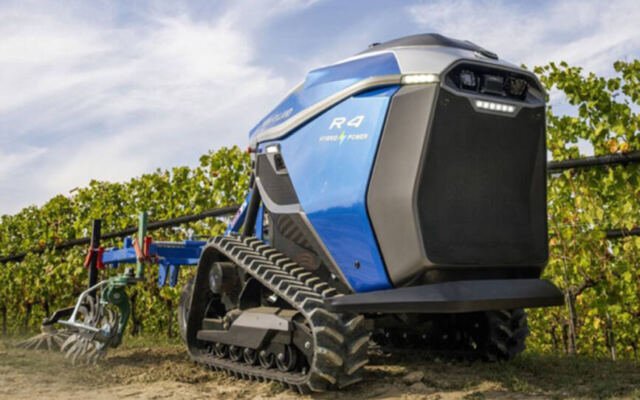
Reimagining robotics for sustainability

RoboHub News — by Celia Luterbacher Imagine a robot designed to install solar panels with much greater speed and precision than a human. The robot is made from expensive materials and powered by a heavy battery that must be recharged every few hours.
If the costs of building and operating the robot outweigh the benefits of the clean energy it helps produce, can it really be considered sustainable? In a 2025 article published in Science, Aude Billard, head of the Learning Algorithms and Systems Lab in EPFL’s School of Engineering and Academic director of the Robotics Center, gives precisely this example to illustrate the tension between robotic performance and sustainability. Roboticists, she argues, can no longer ignore the fact that robots use energy-intensive power systems and electronic components made from finite resources. At the same time, robots have the potential to contribute to addressing some of society’s most pressing sustainability challenges, for example through environmental and biodiversity monitoring, precision agriculture, and the maintenance of critical infrastructure like bridges, buildings, and power grids. “Our ambition is not to simply make robots more sustainable; they must actively contribute to solving sustainability challenges.” – Mirko Kovač, Laboratory of Sustainability Robotics Beyond sustainable robotics Current research at the intersection of robotics and sustainability follows two main paths: developing robots that enable a more sustainable use of resources, and developing robots that are themselves more sustainable due to improved energy efficiency, biodegradability, or recyclability. Mirko Kovač heads the joint Laboratory of Sustainability Robotics at Empa and EPFL’s School of Architecture, Civil and Environmental Engineering. In a cover article recently published in Nature Machine Intelligence, Kovač and his co-authors propose a manifesto that calls on academia, industry, and governments to extend and integrate these approaches within a broader framework that evaluates robots according to their overall contribution to sustainability goals. The manifesto defines a new discipline called Sustainability Robotics (not to be confused with sustainable robotics). “Our ambition is not to simply make robots more sustainable; they must actively contribute to solving sustainability challenges,” Kovač says. The three core principles of Sustainability Robotics. 2026 LSR/EPFL – CC BY SA 4.0 Minimally invasive, accessible… In their article, the researchers argue that robots should no longer be evaluated solely based on technical performance. Instead, their environmental, social, and economic impacts should become part of the equation. To guide this transition, they propose three core principles: robotic systems should be minimally invasive, universally accessible, and symbiotic, creating value for people as well as economies and ecosystems. Rather than viewing sustainability challenges like climate change, biodiversity loss, and resource scarcity as constraints on innovation, the authors argue that they can become opportunities to develop entirely new engineering solutions. Indeed, several EPFL laboratories are already exploring what Sustainability Robotics might look like in practice.