Robotics Summit panel explores the state of humanoid robot design
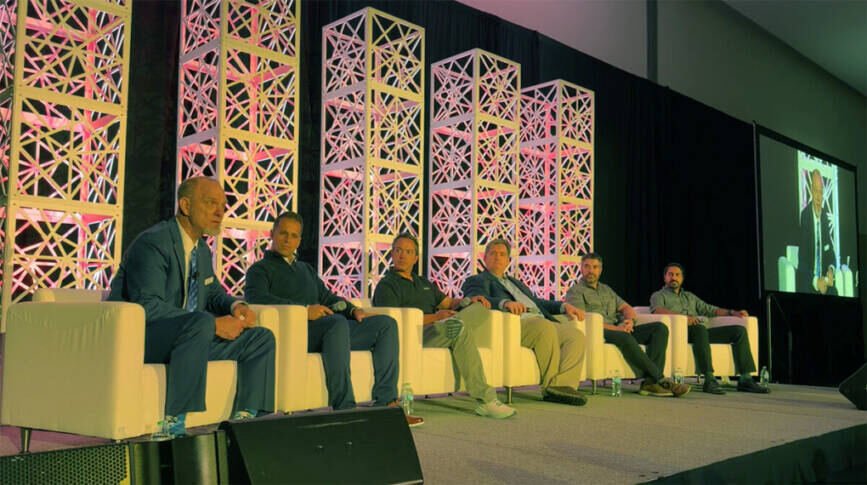
Boston Dynamics — a panel of industry experts discussed the state of humanoid robot development at the 2026 Robotics Summit & Expo.
Plus, there’s the added complexity of that system working in a fast-paced environment with human workers, forklifts, and other machinery. At last month’s Robotics Summit & Expo, a keynote panel focused on the state of humanoid robots. The session boasted a star-studded lineup: Al Makke, head of humanoid robotics for North America at Schaeffler Mike Nielsen, chief marketing officer at RealSense Aaron Prather, director of the Robotics & Autonomous Systems Program at ASTM International Alberto Rodriguez, director of robot behavior for Atlas at Boston Dynamics Pras Velagapudi, chief technology officer at Agility Mike Oitzman, moderator and senior editor at The Robot Report and Automated Warehouse The Robotics Summit & Expo, held at Boston’s Thomas M. Menino Convention & Exhibition Center, included incredible keynotes, presentations, and panel discussions about the world of robots, from their design to their implementation. Presented by The Robot Report, roughly 3,900 attendees filled the presentations and explored the exhibit hall, seeing everything from component manufacturers to tennis ball-shooting robots. Submit your session idea for the 2026 RoboBusiness Humanoid developers look beyond the demos For Boston Dynamics, its North Star for its Atlas program has been enabling it to function as a general-purpose machine for physical labor. Rodriguez said that one of the things the company has seen while deep diving with many customers is that, except for very few applications with very large and stable scale, the norm is that almost all jobs are one of a kind. “Our roadmap is building the technology that is necessary to promote that general-purpose case at the levels of hardware, at the levels of the models and architectures that are driving the behavior, and also very importantly at the level of the deployment strategy,” he said. “For the integration strategy, if you fail on finding a general strategy for any one of those three things, it becomes too expensive.” Rodriguez explained that Boston Dynamics has started with logistics in manufacturing, an application where the company and its parent Hyundai think there is a good balance between generality and complexity. “You have to handle all the parts — for example, like going to a cart — but it’s still not close enough to the assembly line that you have to deal with the timing constraints and the safety constraint of having to work right next to other people,” he noted. “Last year, we brought Atlas as a sort of first exercise into a factory to do a first proof-of-concept demonstration of fully data-driven architecture driving behavior and sequencing scenario.” “We brought it to CES this January for a whole week, just demoing, and next year, we’re going back,” Rodriguez added. “This year, we’re going back to the factory to show a more end-to-end demonstration of Atlas — a full learning pipeline, not just handling the behavior, but handling the entire workflow, connecting to the factory, and handling exceptions.” He also noted that in Boston Dynamics’ journey to mass-production scale, the company has now secured enough customers (including Hyundai) that it has committed to deploy on the order of 25,000 humanoids in factories. Boston Dynamics has made an additional commitment to ramp up production capacity to 30,000 Atlas robots per year by 2028. Agility (formerly Agility Robotics) has also moved past pilot projects. It has worked on Digit humanoid deployments with companies including Amazon, GXO, Schaeffler, Toyota, and Mercado Libre.