Robots in society, business and culture: August 2026
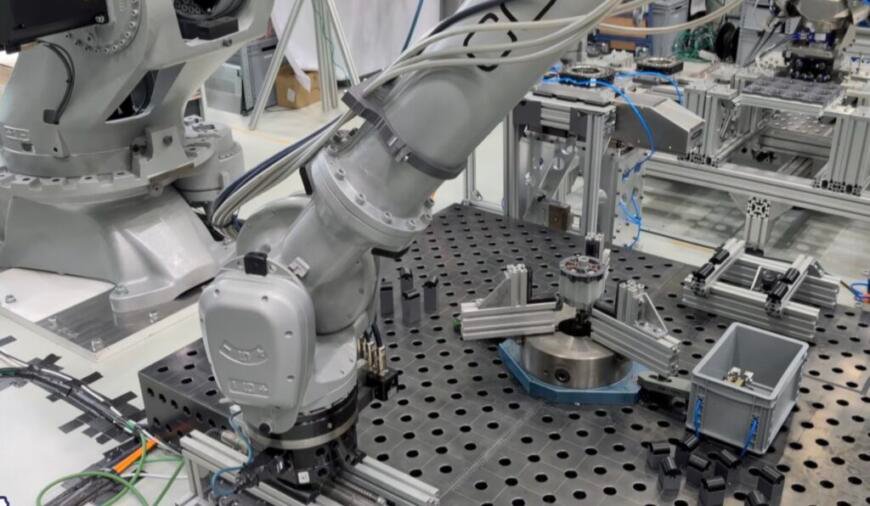
RoboHub News — youtube.com/@baumisrobots9583″ data-wpel-link=”external” target=”_blank” rel=”follow external noopener noreferrer”>Baumis Robots (Karlsruhe Institute of Technology). By Emmet Cole In our new monthly series, we showcase a selection of robotics stories from society, business, research, and culture, as we track the field’s ongoing journey from specialized industrial machines to an increasingly visible social phenomenon.
Reshoring reimagined? In early August, The Information published an article that claimed U.S.-based founders, investors and startups, are travelling to an electronics market in Shenzhen to buy servomotors, sensors, controllers and gimbals. The report also claimed that Unitree and Zhiyuan robots are being bought intact, then stripped down into parts and carried back to the USA in suitcases. By late August, in a separate development, reports emerged that a US Department of Energy lab is investigating whether Chinese LiDAR sensors pose a security risk, if widely used on vehicles in the United States. According to TechCrunch, the research is being funded by one or more companies in the electric and autonomous vehicle industries. Together, the stories highlight the ongoing tension between US security concerns and its robotics industry’s continuing dependence on Chinese hardware. Motorless shape shifters Don’t cancel any Shenzhen travel plans just yet, but engineers at Princeton have unveiled a motorless, origami-inspired robot that can roll, crawl, and change shape through a combination of magnetic control and multistable geometry. Project lead Glaucio Paulino told Princeton Engineering: Geometry is the real actuator here. Instead of relying on complicated mechanisms, we use mathematical principles to encode multiple stable configurations directly into the structure. That opens a new pathway for designing lightweight, adaptable systems. Managing expectations Robot deployments can fail for many reasons, making expectation management a key part of successful robotics projects. This might mean explaining that although collaborative robots can sometimes be deployed without fencing, that is not appropriate for every application, and a risk assessment is still required. It might mean explaining that although robot-assisted radical prostatectomy typically reduces blood loss and shortens hospital stays compared with open surgery, longer-term outcomes depend heavily on the patient, the cancer and the surgeon. In the humanoid space, where expectations are often formed by spectacle and driven by anthropomorphism and millions of years of evolution, the effects can be particularly acute. A Drexel-led study involving 50 adult men that measured brain activity, hormones, self-reported attitudes and behaviour in order to assess trust in human-humanoid interaction, found that participants formed stronger initial connections with an expressive Pepper robot than with a stationary version that gave no nonverbal cues.