Skild AI unveils S1 flagship robot foundation model
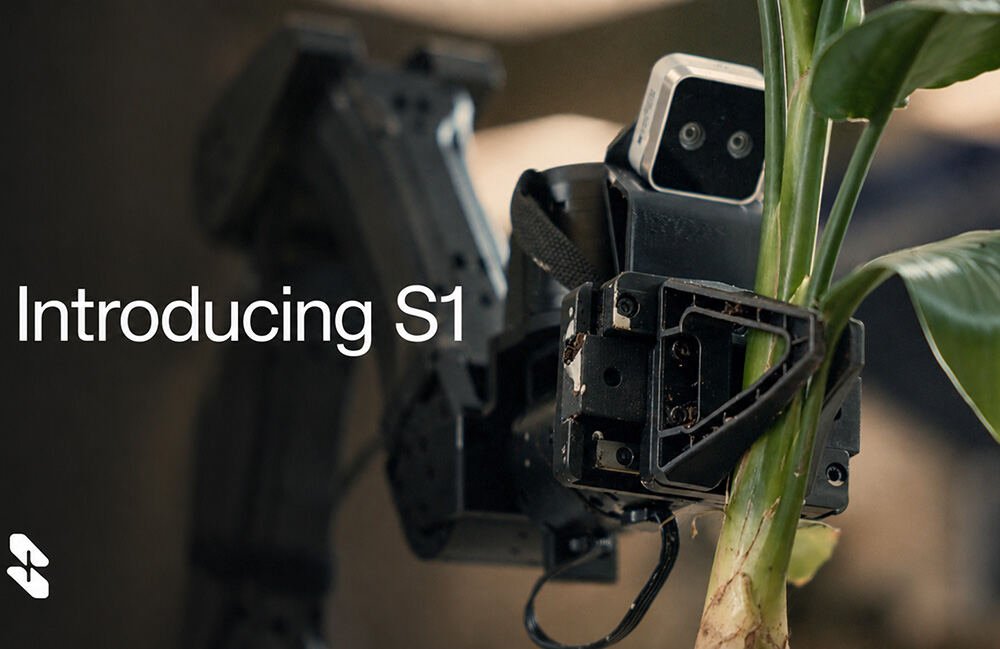
Skild AI said S1 enables in-context learning for robotics. | Since it was founded in 2023, the company has raised nearly $1.7 billion in funding to create a general-purpose robot brain.
With S1, robots can learn new, complex tasks from watching a single video, Skild AI claimed. To do this, the company‘s model uses in-context learning, Deepak Pathak, Skild AI co-founder and CEO, told The Robot Report. “You just add a video of a human doing something in the prompt, also called the context of the model, and it can just follow it on the robot,” Pathak said. “The tasks we are showing are extremely complex and long horizon. They are not three-second, four-second tasks, not those tiny, simple tasks.” S1 pretrains on a range of data types Typically, when faced with new tasks, AI models on robots need to be post-trained to handle them. This can be a lengthy process, and it holds robotics back from scaling. According to Pathak, there are four kinds of robot training data, and Skild makes use of all of them. Teleoperation data: This involves human directly controlling a robot’s actions. Pathak said this type is slow to capture and doesn’t provide a diverse range of data. However, its very high quality, as the data it gathers comes directly from a robot. Human videos: This involves a robot learning how to do a task by watching a video of a person doing it. Human video data is abundant and diverse, but it’s difficult to apply directly to robots. Simulation: Simulation is very common in robotics, and involves using a simulated environment to teach a robot a task. This is very scalable, as it all takes place on a computer, and very diverse. But there is still a gap between simulation and the real world.