Soft robotic heart offers new way to study disease and test life-saving devices
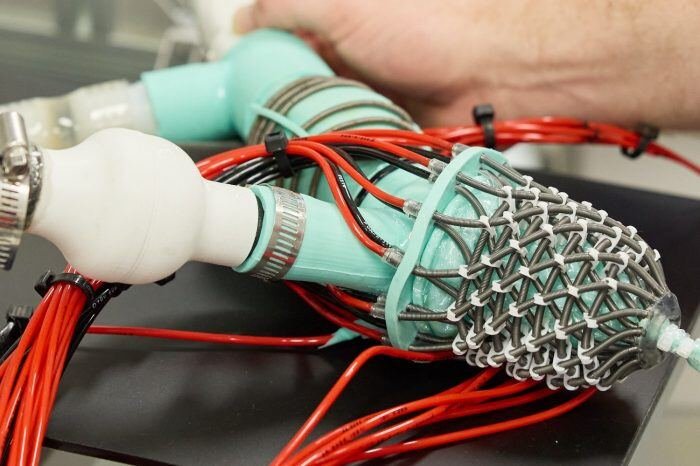
RoboHub News — the soft robotic model of the human heart, developed at UNSW. UNSW researchers have developed a soft robotic model of the human heart that can mimic disease and provide a realistic environment for testing the next generation of cardiac devices.
Researchers at UNSW Sydney have developed a fully synthetic soft robotic heart that reproduces the complex movements and internal structures of the human heart, opening the door to better treatments, safer medical devices and more personalised care. Published in Nature Communications and Advanced Science, the research introduces a beating model of the left side of the heart that includes artificial valves, papillary muscles and chordae tendineae – structures that are critical to healthy heart function and are frequently affected by disease. The device is able to accurately reproduce the process in a real heart where cardiac valves leak and blood flows backwards, which increases the risk of heart failure and other life-threatening complications. In that way, the research team say the new soft robot can eventually help provide a better understanding of heart conditions, reduce reliance on animal testing and provide doctors with patient-specific models to plan treatments before procedures are performed. Team leader, Scientia Associate Professor Thanh Nho Do, from UNSW’s School of Biomedical Engineering and UNSW Medical Robotics Lab, says the work is important because cardiovascular disease remains the world’s leading cause of death. “Heart failure with preserved ejection fraction (HFpEF) is a complex heart condition that often occurs alongside other health problems such as high blood pressure, irregular heartbeats, kidney disease, obesity, and diabetes,” Professor Do says. “Because it affects people in different ways, developing medical devices to improve heart function is challenging. “The valves in the heart are also crucial for cardiac efficiency, but disease can cause them to become leaky or stiff. This can increase the workload of the heart and contribute to heart failure. “Our broader goal is to build realistic artificial heart models that can help researchers understand disease and develop safer, more effective devices before they are tested on animals or reach patients.” Recreating the beating heart The model developed at UNSW is a soft, flexible replica of the left side of the heart. Silicone membranes form the internal chambers, while soft robotic artificial muscles wrapped around the structure reproduce the way the heart naturally contracts and twists. Unlike conventional laboratory models, the soft robotic heart contains the structures responsible for controlling the mitral valve, which in real life acts like a pair of swinging doors that open and close with each heartbeat to ensure oxygen-rich blood flows to the body while preventing backward leakage. The inclusion of this specific physiological feature of the heart in the model will allow researchers to reproduce diseases in which the valve does leak and blood starts to flow backwards. “The model is made from flexible materials and powered by artificial muscles that are arranged to mimic the layered muscle architecture of the human heart,” Dr James Davies, a postdoc in Do’s group, says. “We found a way to model this muscle fibre architecture using soft robotic artificial muscle fibres.