StateBench: Testing how language models track state changes over long documents
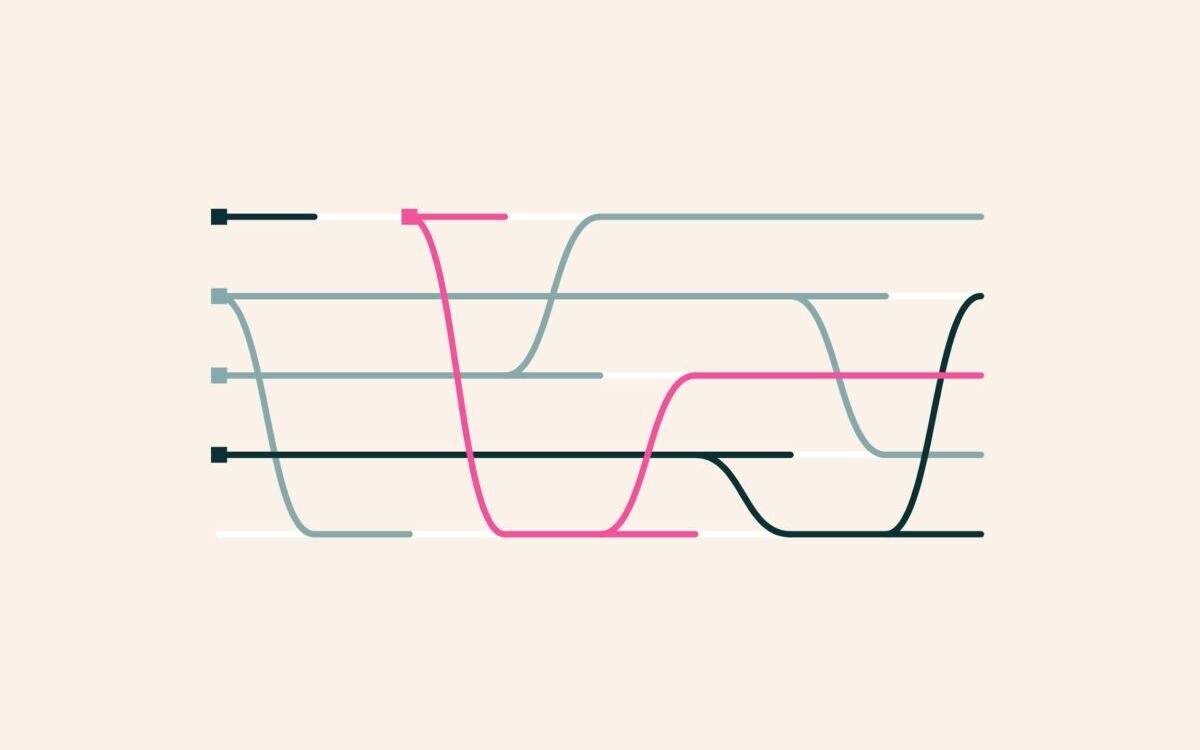
Hugging Face we’re introducing StateBench, a benchmark for long-context state tracking—how well language models keep track of information about entities in long documents as they evolve. State tracking underlies tasks from reading code, where variables are assigned and reassigned, to following a story as characters physically move around and objects change hands.
For example, if a mystery novel states that “John gave Mary the knife” right before a murder occurs, it’s important to know that the state of each character has changed. However, not all state-tracking problems are created equal: some require only finding the latest update; harder ones require following a chain of changes, where one missed step can throw off the final answer. For example, a harder variant of our mystery state tracking would be if John gave Mary the item in his backpack, with it previously known that Edward put a knife in John’s backpack. Transformers have well-documented theoretical limits on hard variants of state tracking with long dependency chains, helping motivate recurrent and hybrid architectures such as Gated DeltaNet that carry a running memory forward. Existing state-tracking tests tend to focus on the hardest cases, but as these designs become more common, researchers need to know which kinds of state tracking each architecture can handle. We would like to understand the differences between architectures not just on the hardest kinds of state tracking, but also on the simpler, potentially more common kinds. To this end, we developed the StateBench benchmark to capture state-tracking problems of different complexity, which we used to evaluate the differences between language models with different architectures. We find that recurrent and hybrid models can generalize much farther than transformers when trained directly on these tasks, while frontier models including Gemini 3.8 Flash, Claude Opus 5.5, and GPT-6 Sol and Luna still break down on harder forms of state tracking as inputs grow longer. StateBench consists of four difficulty levels that permit increasingly complex state update operations. For programmers, these levels of state tracking complexity can be understood as allowing different types of variable assignment operations: These levels can be intuitively understood in terms of variable assignments, but they also represent theoretically motivated distinctions in state tracking rooted in Krohn–Rhodes theory, a branch of algebra that describes how state-tracking problems – which can be viewed as word problems over finite monoids – can be decomposed into atomic primitives. Each level in our hierarchy corresponds to a class of state-tracking problems that can be built out of a different set of primitives. To compare the four levels fairly, we start with a general finite sequence of variable assignments and derive three easier versions from it, producing four comparable StateBench problems—one at each difficulty level. All four use the same number of variables and distinct values, with assignments appearing at the same points in the sequence; only the type of assignment changes. We tested a range of open pretrained models on the r-trivial, aperiodic, and general finite levels of StateBench to see where their state tracking breaks down, and whether different architectures fail where theory predicts. Under standard theoretical assumptions, transformers can handle r-trivial robustly (and soluble and aperiodic to some degree) but are predicted to fail on general problems. In contrast, Gated DeltaNet with a more flexible memory update can, in principle, handle all four levels. We started with open pretrained models, where the training data and context lengths are fully documented.