Why you should combine robot dexterity with mechanical positioning for complex assembly operations
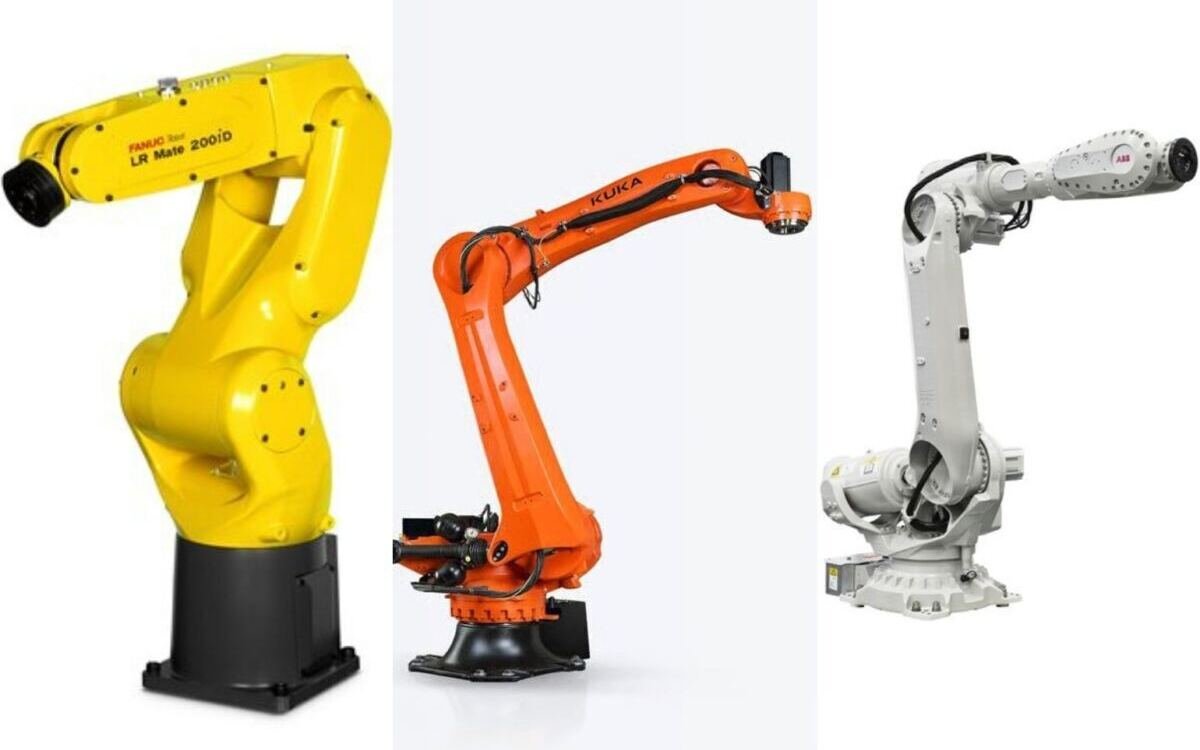
From left to right: The FANUC LR Mate 200 iD, the KUKA KR QUANTEC, and ABB’s IRB 6700. | While automation is the goal, experts are recognizing the importance of mechanical positioning and its impact on the machine’s mobility, range and speed.
Considering these characteristics more comprehensively could yield greater efficiency in automated assembly operations. How precision positioning and components enhance robotics Positioning is essential for a robot’s success because it defines its potential as much as its limitations. This equipment has a fixed reach, regardless of the power and flexibility of its components. Every machine is inhibited and empowered by its mechanisms, such as its joints and actuators. Additionally, positioning systems enable every component to operate at its maximum potential, making these implementations vital for production. Linear transfer systems Linear transfer systems expand a robot’s range of motion. These include linear and robot transfer units that promote fluid movement along a track. Using these mechanisms to diversify movement would enable large-scale projects, such as aerospace and defense products, to be largely produced with robotic aids. They could easily move around massive assemblies, executing multiple tasks, compared to stationary robots. Models that are making waves tout seventh-axis mobility and fast deployment. Rotary index tables Rotary index tables are components that promote precision and speed in repeated processes. They are embedded in robots to enable rapid rotational movement during assembly. The tables amplify equipment by allowing robots to do multiple tasks simultaneously, including assembly, packing, and quality control. Advanced workpiece positioners Multi-axis workpiece positioners enable robots to move in multiple orientations rather than remaining fixed to a plate or pedestal. If machinery could rotate more than its arms or approach an assembly at a tilt, it could accomplish more complex assignments.