Zest launches a restaurant discovery app powered by where people actually eat
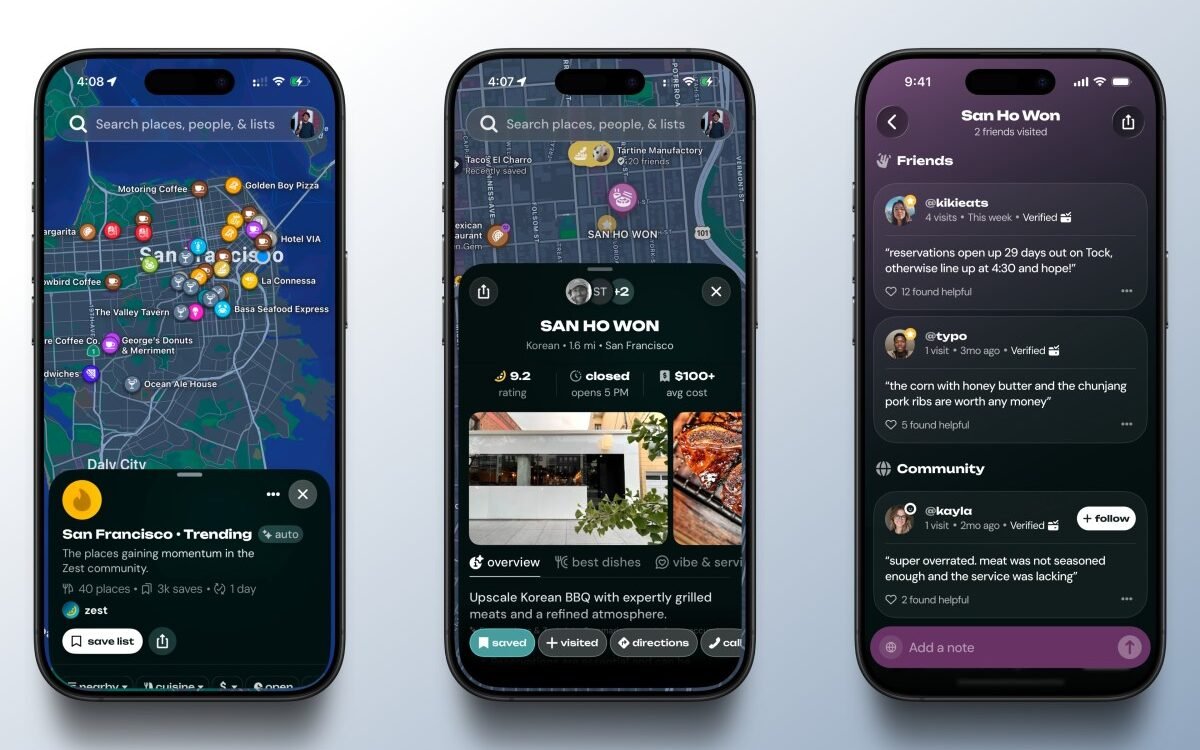
backed by Alexis Ohanian’s 776 and Kindred Ventures, Zest uses transaction data and AI to generate restaurant recommendations based on users’ real dining habits and the places they frequent.
Founded in November 2024, Zest currently has $1.8 million in pre-seed funding from Alexis Ohanian at 776 and Steve Jang at Kindred Ventures. It has been in beta testing since nearly day one, expanding from friends and family to larger groups over time. Now, the app has launched to the public, allowing anyone to track their dining outings and get recommendations. In a matter of weeks, Zest has attracted over 100,000 visits post-launch and is growing. While a number of apps allow people to make dining wishlists or curate favorite spots, Zest’s advantage is that its recommendations are based on real-world data. To use Zest, you’ll link your credit card to the app, and it will import all the restaurants you’ve visited to create a personal dining map that others can follow. As the app learns where you dine and what you like, it gets smarter, making personalized recommendations of what to try next. You can also follow friends or creator-curated profiles to get other suggestions of where to eat, either in your own city or when traveling, if you choose. Your credit card data is imported into Zest via the financial services company Plaid, trusted by banks and other fintech and budgeting apps. This allows the app to access your credit card transactions, import only those in the food and drink categories for its map, and ditch the rest. The idea is not as crazy as it seems. Venmo also leverages people’s desire to share where they shop and dine with others, turning spending into a social network of sorts. And in an earlier era of the web, a startup called Blippy infamously tried to turn a feed of your purchases into a recommendation network of sorts. Where Blippy and others like it went wrong is that they stopped at data-sharing alone, instead of building a network based on the data that improved their understanding of user interests over time. In addition, they were likely too early, as consumer sentiment toward data-sharing has improved over time, as they saw where it could add value in services like Apple’s Find My Friends, Snap Map, and others.