Narwal builds robot vacuums to serve regional needs
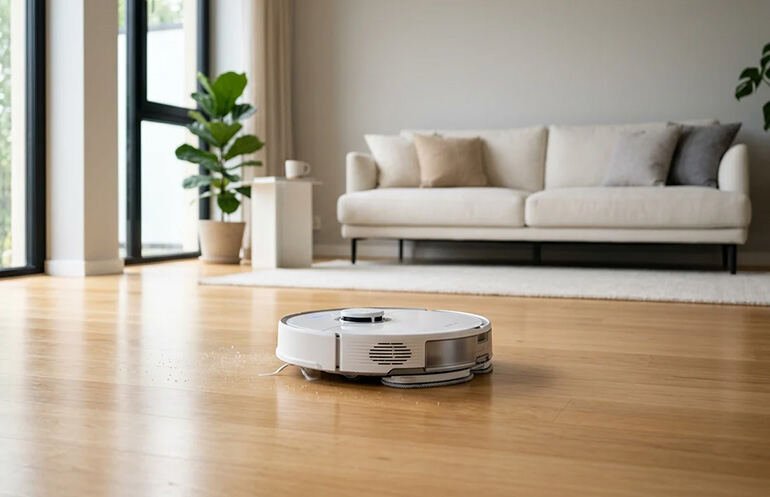
Amazon — narwal has designed robots that can both vacuum and mop. iRobot Corp.
was the pioneer but entered bankruptcy proceedings late in 2025. Narwal Robotics Corp. has spent a decade on research and development, testing 30 technical routes to self-cleaning robotic mops, and building a supply chain to retain cost control. While iRobot has emerged from bankruptcy with a new owner, Narwal is working toward an initial public offering (IPO). The company, which has offices in Shenzhen, China, and Covina, Calif., is looking to embodied intelligence to take home robots from the “iPod stage” to the “iPhone moment,” according to founder and CEO Junbin Zhang. Zhang and Icey Bin, head of global brand at Narwal, replied to the following questions from The Robot Report: Narwal took time to understand the household space Why has the household robotics market been so difficult to break into? The household robotics market has exceptionally high barriers to entry in R&D, supply chain, and algorithm development. In the early days, there were no mature industry solutions to reference. For instance, Narwal spent three years with zero revenue solely focused on R&D, iterating the self-cleaning mop structure over 10 times from scratch. Additionally, contract manufacturers were initially reluctant to cooperate due to the complex product structures and low initial volumes. On the software side, features like automatic mop washing require extremely precise positioning algorithms for the robot to frequently return to its base station, which the industry lacked at the time. Most importantly, to achieve a high market penetration, a company must refine the product’s experience, quality, and cost to the reliable standards of mature home appliances, which is an incredibly difficult ceiling to break through. iRobot struggled for a number of reasons. Haven’t other vacuum providers such as Dyson picked up market share? Over the past decade, the core dimension of industry competition has fundamentally shifted from stacking hardware parameters to delivering a low-intervention, automated cleaning experience.