OpenAI’s deployment chief on Codex growth, falling AI prices, and the ROI question
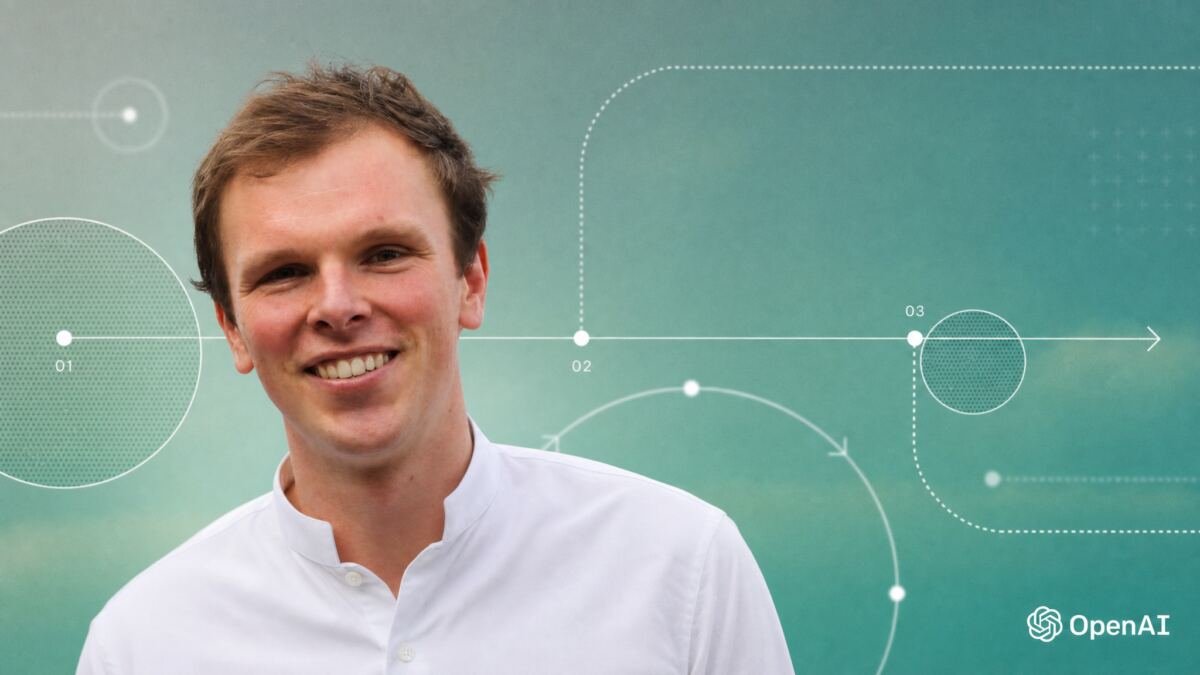
OpenAI deployment chief Arnaud Fournier explains in an interview how DeployCo wants to embed AI deep inside large corporations using its own engineers. He talks about explosive Codex growth, the feedback loop from customers back into model development, and why he thinks the price of AI intelligence has dropped sharply.
Two years ago, Arnaud Fournier co-founded OpenAI’s Forward Deployed Engineering team and served as the first FDE, later running the function for EMEA and global verticals. Since April 2026, he’s been CTO of the OpenAI Deployment Company, known internally as DeployCo, which the company unveiled in May alongside 19 private equity firms plus global systems integrators and consultancies. The subsidiary’s first acquisition comes from Europe. British consulting firm Tomoro brings roughly 150 forward deployed engineers and deployment specialists over to DeployCo. “This is going to be a global company with a key leadership presence in Europe,” Fournier tells THE DECODER.Ad Engineers on-site who feed real-world problems back into OpenAI’s research The FDE function exists for two reasons, Fournier says: to solve customers’ problems, and to understand the state of the art and the challenges of rolling out the technology. A model or an API alone doesn’t create value. Value shows up only once the technology gets embedded in business processes, stays compliant, and can be monitored. “Unless we, as the people that create the technology, are deeply embedded with our customers, it’s hard for us to bring this to our customers in the best way and also continuously evolve with those tools.” The engineers sit at the interface between the product and research teams on one side and the customers on the other. They carry lessons back into the company while bringing the latest technology to customers. There are sites in Paris, London, and Munich, and the team runs joint projects with German firms.AdDEC_D_Incontent-1 Asked where the line runs between this work and consulting partners like Deloitte, Fournier points to the recently announced Frontier Alliance ecosystem with Accenture, Capgemini, BCG, and McKinsey. These firms have built massive business units around AI over the past few years, he says, but they face the same problem as everyone else: “It’s hard to keep up with the technology.” The partnership with OpenAI’s engineers is meant to make sure the consultants always deliver the current state of the art to their clients, along with the tools and systems they need. That these same firms invest in DeployCo and supply Alliance partners is, to Fournier, proof of their interest in putting all this into practice with OpenAI. The exact division of labor between OpenAI’s own FDEs and the consulting partners, who potentially compete for the same engagements, stays fuzzy in the conversation. Asked whether the work done at customers flows back into training future models, Fournier puts it this way: “We do not train on our customer data unless someone explicitly asks us to.” In those cases, he says, it becomes a research partnership. There are very few of them, and they go through extensive regulatory review on both sides.Ad The real feedback loop runs through two other channels, according to Fournier.