Firefly Aerospace Operates NVIDIA Jetson in Lunar Orbit for the First Time
Firefly Aerospace Operates NVIDIA Jetson in Lunar Orbit for the First Time
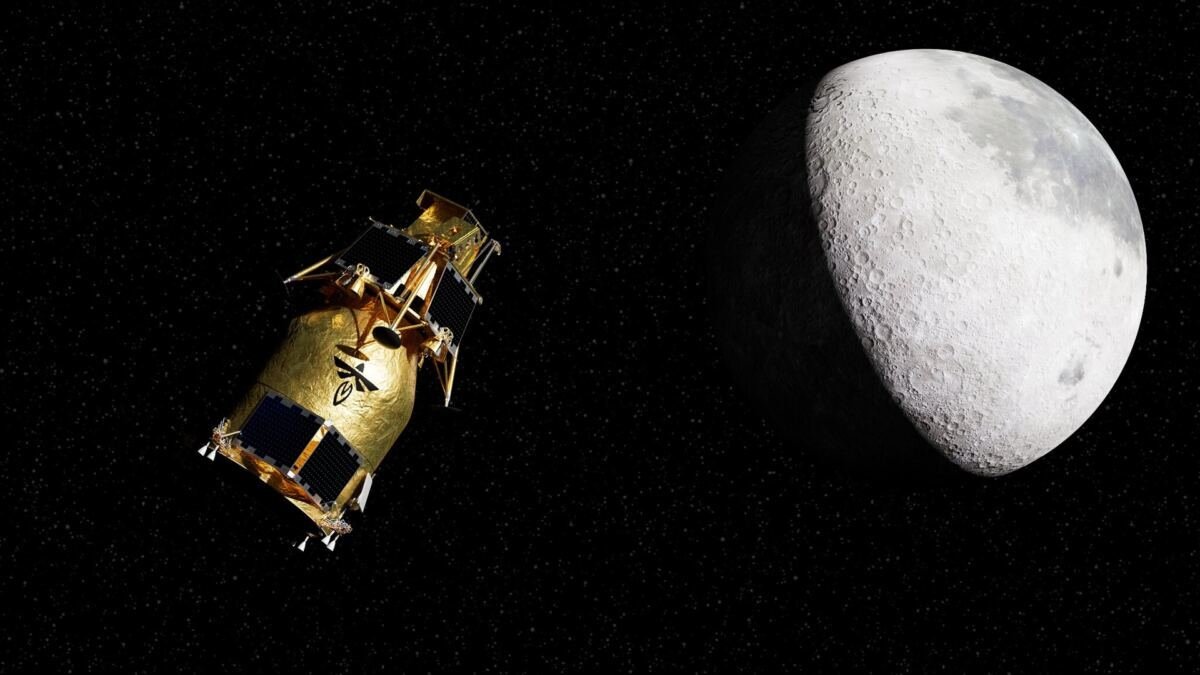
This time, rather than sending massive volumes of raw data home for processing that takes weeks or months, Ocula will run AI algorithms directly on orbit, using Jetson to extract critical insights and transmit only the most relevant information — based on customer need — back to Earth in near real time, vastly reducing latency and costly downlink. For Blue Ghost Mission 2, a lunar lander will separate and descend to the far side of the moon — carrying science and technology instruments including a radio telescope — in support of NASA-funded, UC Berkeley-led research to detect faint signals from the cosmic Dark Ages shortly after the Big Bang. Meanwhile, Firefly’s Elytra spacecraft will continue orbiting the moon for its five-year mission, running Ocula and its NVIDIA Jetson AI-powered processing chain. “Our vision is to continue lighting the path to a bold space ecosystem that expands humanity’s future,” said Jason Kim, CEO of Firefly Aerospace, which is a member of the NVIDIA Inception program for cutting-edge startups and based in Austin, Texas. “We believe in a future where all AI processing and sensing will happen in space,” he added. “It’s like the transatlantic cables that connect the continents on Earth to enable the internet — we want to do that same kind of thing in space: connect all these different orbital constellations to enable something greater than any individual constellation.” Traditionally, space-based sensing follows a slow pipeline: Sensors collect data and downlink it over constrained and latent radio bandwidth. Then, traditional CPU-based terrestrial processing takes days or weeks to gain valuable insights. By running AI inference directly on orbit with NVIDIA Jetson, Firefly can dramatically compress that timeline. The Ocula sensor will collect imagery across ultraviolet and visible spectrum bands. This data will then be rapidly processed onboard Elytra in lunar orbit and autonomously transmitted back to Earth using the Jetson module — powered in space by solar panels and combined with Firefly’s AI software from its SciTec subsidiary. “We’re going to be able to do that for the first time in history,” Kim said of on-orbit AI processing around the moon. Ocula supports a range of use cases that will ultimately help humans explore the vast possibilities of space.