OpenAI’s GPT-5.6 Sol Ultra reportedly solves a 50-year-old math problem in under an hour
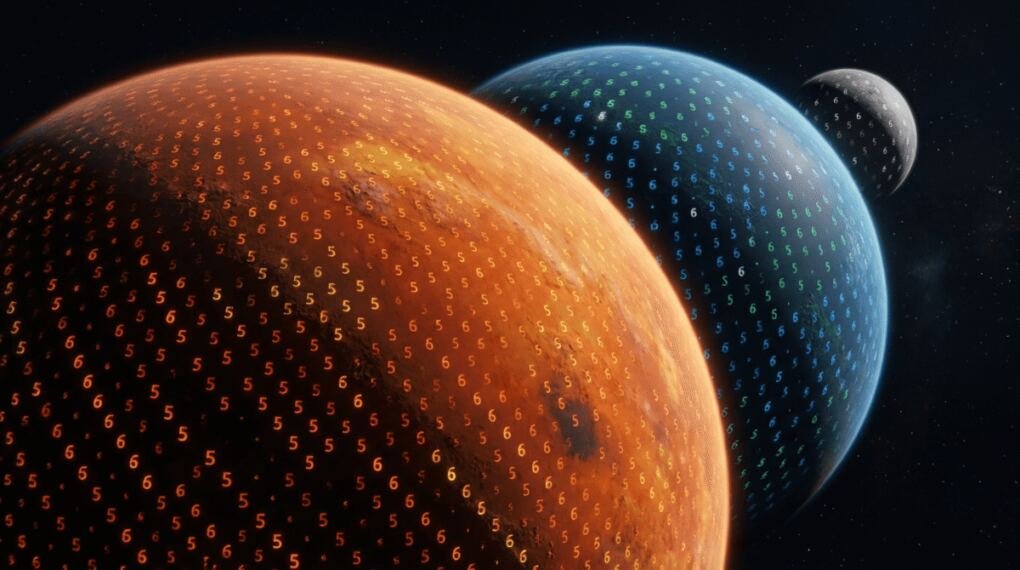
OpenAI’s GPT-5.6 Sol Ultra produced a proof of the Cycle Double Cover Conjecture in under an hour, using 64 subagents working in parallel. The conjecture had remained unsolved for 50 years.
OpenAI has announced that GPT-5.6 Sol Ultra has generated a complete proof of the so-called Cycle Double Cover Conjecture. The conjecture had remained unproven for about 50 years. The AI model took just under an hour to complete the task, utilizing 64 subagents working in parallel. Put simply, the conjecture addresses a fundamental question in graph theory: Would it be possible to find a set of cycles in any network of vertices and edges that traverses each individual edge exactly twice? The problem was formulated independently by several mathematicians in the 1970s. Since then, there have been many partial solutions for special cases, but no generally accepted proof. According to OpenAI, the proof comes entirely from GPT-5.6 Sol Ultra. The paper was written by GPT-5.6 Sol. Mathematician Thomas Bloom of the University of Manchester calls it “a very nice proof,” noting that the solution is “short, elementary, and could have been discovered in the 1980s.” It doesn’t need any new mathematical theories, but it cleverly combines known tools. So why didn’t humans find it? Bloom suspects the key step involved a small, counterintuitive twist in the reasoning. A human mathematician would likely have tried the obvious approach, seen it fail, and moved on. AI doesn’t get discouraged; it just keeps trying small variations until one clicks. “One can imagine trying the natural labelling first, checking the linear algebra, and when that failed shrugging and thinking ‘oh well, I was expecting to fail, guess it can’t be done this easily’ – while the AI does not get discouraged and keeps trying small variations,” writes Bloom. Bloom’s initial assessment is the most detailed public evaluation so far; a full mathematical verification by the scientific community is still pending. Bloom says the core mathematical ideas behind the proof trace back at least to a 1983 paper by Bermond, Jackson, and Jaeger. He criticizes that OpenAI’s paper doesn’t mention this prior work at all, so that anyone reading only the paper might think the AI invented the underlying strategy itself.