NVIDIA Announces Expanded Jetson Thor Lineup with Mid-Range T3000 and T2000 Modules
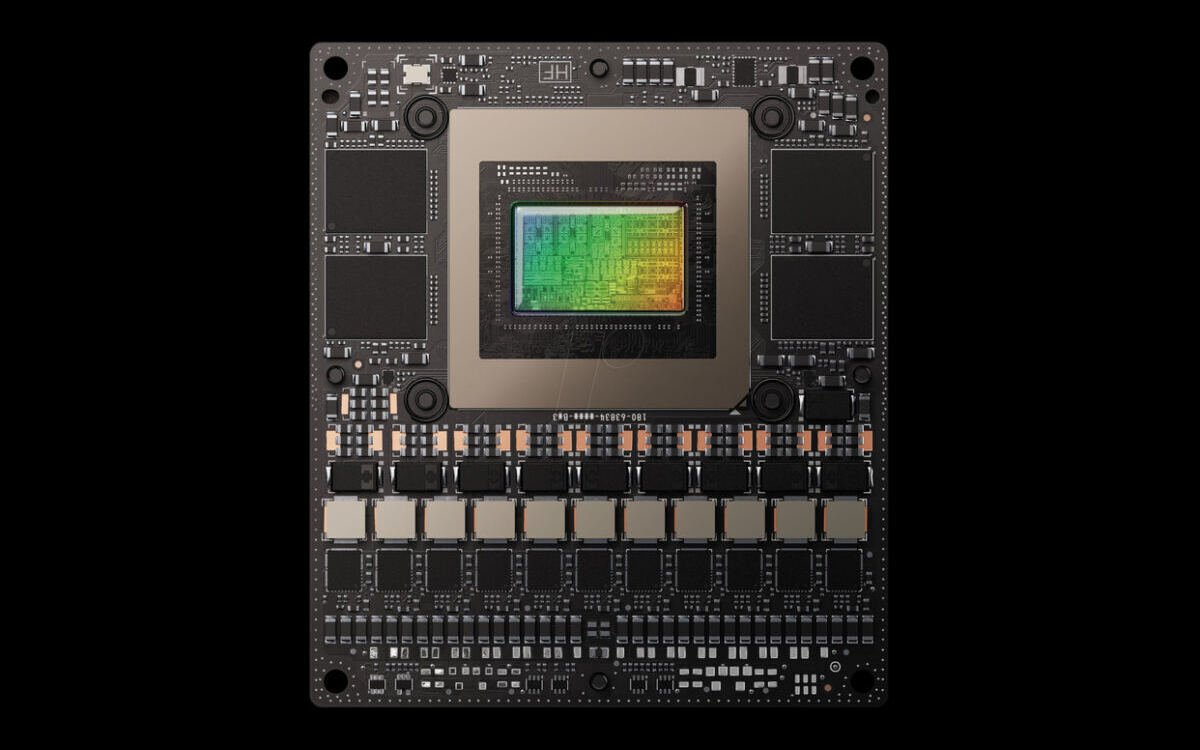
NVIDIA this week announced it will expand its Jetson Thor lineup of robotics and edge AI boards with a pair of new mid-grade models. Coming to the Jetson lineup at the start of 2027 will be the Jetson Thor T3000 and T2000, which will join the existing Jetson Thor boards as lower-cost, lower-performance, lower-power alternatives to NVIDIA’s current high-end boards.
This hits particularly close to home since our NVIDIA Jetson AGX Thor Developer Kit runs an amazing array of applications 24×7 in the STH studio. Newer, Cheaper Jetson Thor Boards: T3000 and T2000 NVIDIA’s latest Jetson Thor announcement comes as, although the company is greatly benefiting from the boom in AI, the spike in component costs is hurting their other business, both in the consumer and in the industrial space. For the Jetson Thor boards, the only options for customers specifically after NVIDIA’s Blackwell-based Thor hardware are to buy the existing T4000 and T5000 boards, which ship with 64GB and 128GB of memory, respectively. To that end, the company is taking a couple of important steps to expand the Jetson Thor hardware lineup while addressing the cost concerns brought on by memory prices. First and foremost, then are the new Jetson T3000 and T2000 boards. Both of these Jetson boards are based on the same Thor SoC that powers the rest of the current Thor products, but are further pared down in terms of configuration and capabilities. The more powerful of the two new boards will be the T3000, which offers 8 Arm Neoverse V3AE CPU cores along with a 1536-core Blackwell iGPU. In terms of performance, NVIDIA is quoting 865 TFLOPS of spare FP4, which is about 72% of the T4000’s GPU performance. Notably, both parts feature identical GPU configurations, so the performance difference would come down to GPU clock speeds rather than reducing the amount of GPU hardware further. The Thor SoC on the T3000 board will be paired with 32GB of memory, half the amount found on the T4000. Importantly, despite the reduction in memory capacity, this board retains the full memory bandwidth of the Thor SoC: LPDDR5X-8500 on a 256-bit memory bus, providing 273GB/s of memory bandwidth. While the T3000 has lower GPU performance than the more powerful Jetson boards, it offers the same memory bandwidth they provide. It is presumably for this reason that NVIDIA is promoting the T3000 as offering “similar inference performance of the T5000 for multimodal workloads.” For AI workloads that are primarily memory bandwidth-bound (not memory capacity-bound), the T3000 is likely to be quite close to the T4000 and T5000 in that regard. This, in turn, is why NVIDIA is pitching the T3000 as a more budget-friendly option for customers who need Thor-based boards for their products but are held back by the high (and rising) costs of current high-end Jetson boards. Rounding out the package, the T3000 retains Thor’s 25Gb Ethernet connectivity, though it is not clear how many of the SoC’s native 4 controllers will be exposed.