AMD’s Physical AI Plans Come Into Focus as Company Launches Ryzen Embedded AI X100
Among the announcements in a very packed Advancing AI keynote from AMD, the chip firm devoted some time to physical AI and new products in that area. It felt a bit out of place next to AMD’s copious, high-profile server hardware announcements, if we are being honest.
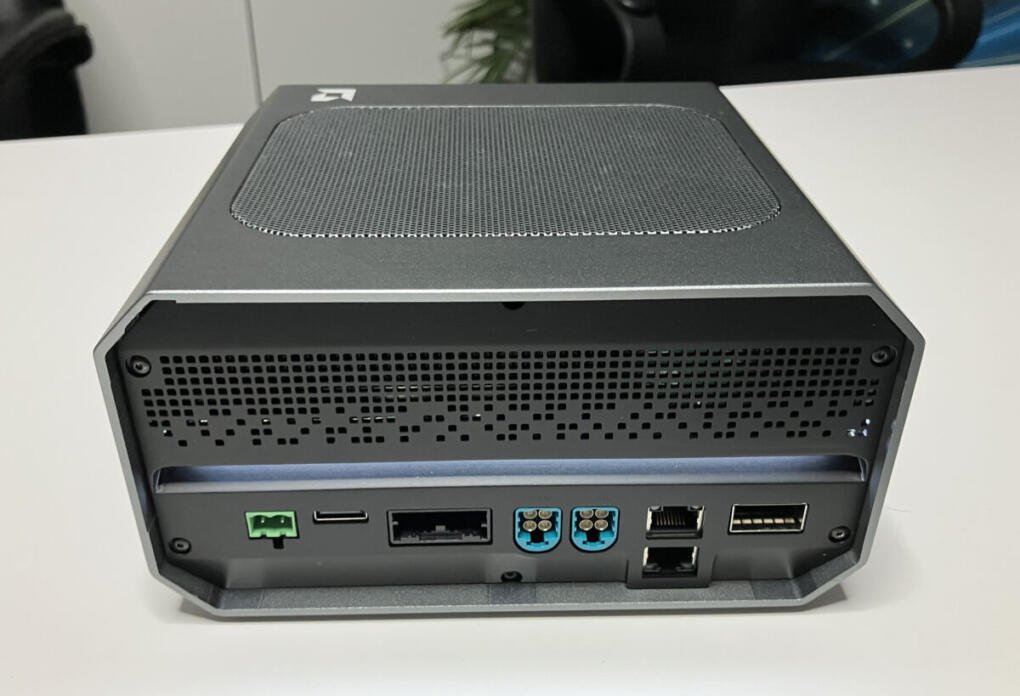
But it also offered a critical look at AMD’s priorities beyond just selling Helios racks stuffed to the gills with EPYC CPUs, Instinct GPUs, and Pensando networking. While continuing to grow their AI server market share is certainly AMD’s highest priority at the moment, the company is also keeping an eye on what is next. Flush with cash thanks to the recent datacenter AI boom, AMD now has the cash flow and resources to invest in expanding into new and peripheral markets rather than merely shoring up its core markets, and as we learned from AMD’s Advancing AI 2026 keynote, one of those growth opportunities for AMD will be the physical AI market. The newer, catchier name for the robotics and edge AI market, physical AI, has become a major focal point for all the chipmakers – something we saw in spades as recently as Computex. And while this means that AMD is not the only chipmaker chasing this market, if the broader market trends are to be believed, they are right on time. With server-side AI having established itself with LLMs and agentic systems, AMD believes the next frontier for business AI use is physical AI. The whys are a confluence of factors and technology developments, but developments in the AI space are a huge driver here. As virtually every segment of AMD is quick (and eager) to remind everyone, AI has improved by leaps and bounds over just the first half of the year. Model accuracy has not just further improved, but the size of the models needed to achieve “good enough” results has continued to drop. As a result, reasonably sophisticated AI models are finally catching up to what robotics hardware and other edge systems can do. The compute costs and challenges of providing a versatile AI to operate a robot have become cheaper and easier than ever, perhaps with the caveat that memory prices are an industry challenge. To that end, AMD is preparing a suite of new products for one of its high-growth markets, with plans to deliver bigger and better products with larger investments going forward. Among these are a new high-end embedded SoC based on AMD’s Strix Halo silicon, the Ryzen AI Embedded X100, as well as new Kria system-on-module and dev kits based on that chip, and an even broader software strategy to develop comprehensive libraries and frameworks to simplify software development for the platform. In short, AMD is planning for a full-court press on the physical AI market, and that strategy is finally coming into focus with AMD’s latest batch of physical AI announcements at Advancing AI. AMD Ryzen AI Embedded X100: Strix Halo Goes Industrial First and foremost on the hardware side of things, let us cover AMD’s physical AI hardware announcements.