Google Deepmind’s WeatherNext predicts cyclone tracks and intensity at the same time
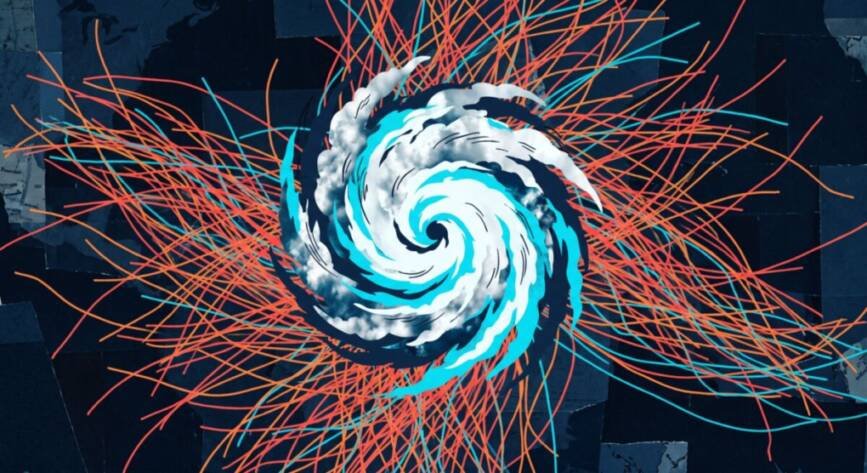
Google — deepmind’s new weather AI forecasts tropical cyclones more accurately than specialized models, and it does so with data that’s a hundred times coarser. How exactly it pulls this off isn’t clear even to the developers.
Google Deepmind is introducing WeatherNext Cyclones, or WN-C, an AI system for tropical cyclone forecasting that can see about one day further into the future than leading operational models. The improvement roughly matches the progress traditional weather models have made over the past decade. The model was built with the National Hurricane Center (NHC), the Cooperative Institute for Research in the Atmosphere, and the UK Met Office. Since June 2025, forecasts have been running live on Google’s Weather Lab. During Hurricane Melissa, which made landfall in Jamaica in 2025, the model helped the NHC predict the storm’s rapid intensification in time, according to Deepmind. That’s when a storm gains at least 30 knots (about 34 mph) in wind speed within 24 hours. Cyclone forecasting has long suffered from a tradeoff. Global models like ECMWF’s ensemble system (ENS) are strong on track prediction but too coarse for intensity. Specialized regional models like NOAA’s Hurricane Analysis and Forecast System (HAFS) deliver more precise intensity readings but lose accuracy on the track. WN-C handles both in a single system, according to a paper published in Nature. For a five-day forecast, the estimated storm center position is off by an average of 230 kilometers, compared to 370 kilometers for ENS and 335 kilometers for Deepmind’s predecessor model GenCast. On three-day intensity forecasts, WN-C is 3.75 knots (about 4.3 mph) more accurate than HAFS. WN-C also scores more than twice as well as ENS and GenCast on probabilistic storm intensity forecasts across many lead times. For the probability of 64-knot winds, the threshold where a storm reaches hurricane strength, the model delivers higher practical value for decision-making than ENS, according to Deepmind. WN-C works with a data grid where each point covers about 28 kilometers, roughly a hundred times coarser than specialized regional models.