ByteDance’s “iLLaDA” is a diffusion language model that keeps up with Qwen2.5
Researchers from Renmin University and ByteDance have released iLLaDA, an 8B language model that generates text differently than ChatGPT. It matches Qwen2.5 at the base level but falls behind after fine-tuning.
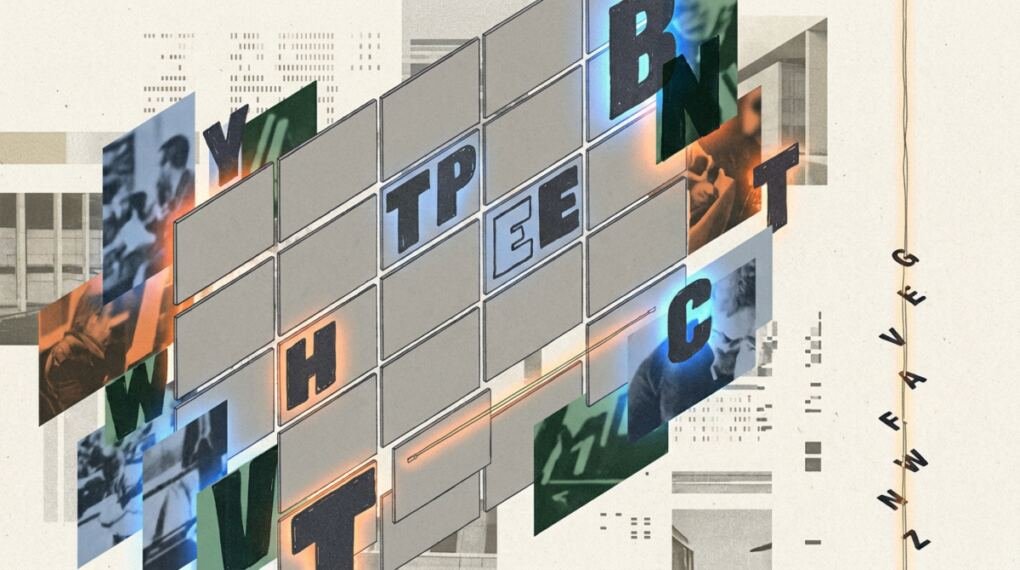
Nearly all well-known AI language models like GPT, Claude, or Qwen generate text autoregressively: word by word, left to right, with each new token depending only on the ones before it. Diffusion language models take a different approach. They start with a sequence of placeholders, called masked tokens, and refine them across multiple passes in parallel. It’s similar to how image models shape a picture from noise. Every position can attend to every other position at the same time, making the process bidirectional. iLLaDA is part of a broader movement that includes Google. In June 2026, Google DeepMind released DiffusionGemma. That model generates text about four times faster via diffusion but scores worse on benchmarks like MMLU and code than the similarly sized autoregressive Gemma 4. Google recommends it for low-latency use cases, not quality-critical production. DiffusionGemma takes a different approach. It’s built on the Gemma 4 backbone, a 25-billion-parameter mixture-of-experts model that swaps only the generation method to prioritize speed. iLLaDA, short for “improved LLaDA,” goes the other way. It’s a dense 8B model trained from scratch, focused on quality. The question behind all of this is whether a diffusion model built from the ground up can actually keep up with autoregressive models. A direct numerical comparison between the two is tough, though.