Deepmind dismantles its AlphaFold team as key authors leave for Anthropic
The majority of the researchers behind AlphaFold are now working on other projects, and almost a quarter have left Google Deepmind altogether. The restructuring marks a sharp turn away from the strategy that put the lab on the map.
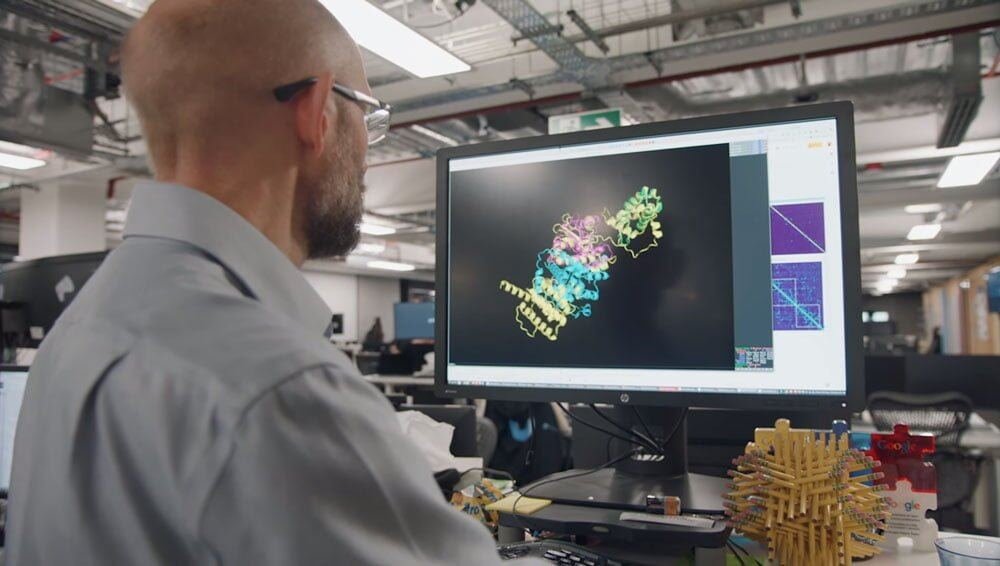
Google Deepmind has broken up the team behind AlphaFold, the Financial Times reports. Most of the original authors of the AlphaFold papers were reassigned internally over the past year. Deepmind confirmed the moves. The researchers are now working on projects built around Google’s Gemini large language model, as well as enzyme design, nuclear fusion, and genomics. Others transferred to Isomorphic Labs, the Alphabet subsidiary focused on drug discovery that was spun out of Deepmind in 2021 and has partnerships with Novartis and Eli Lilly. Nearly a quarter of the full-time Google Deepmind authors of the original AlphaFold papers have left the company entirely, according to the FT. AlphaFold, developed starting in 2018, predicts the three-dimensional structure of proteins. John Jumper, vice president and engineering fellow, and Deepmind CEO Demis Hassabis received the 2024 Nobel Prize in Chemistry for the work. The project became the defining example of Deepmind’s strategy of pursuing long-term scientific breakthroughs through dedicated research teams. That approach is now being abandoned. “Our strategy over the last nine years has been to focus on grand challenges . . . a concrete goal every project is focused on,” Pushmeet Kohli, vice president of research at Google Deepmind, where he founded and leads the AI for Science team, told the FT. “The strategy has evolved.” Rather than simply organizing researchers around single scientific problems like protein folding, the lab is now also building Gemini-powered systems that can assist scientists and eventually automate parts of the scientific process.