GitHub and UNDP team up to advance development priorities in Ghana with open source
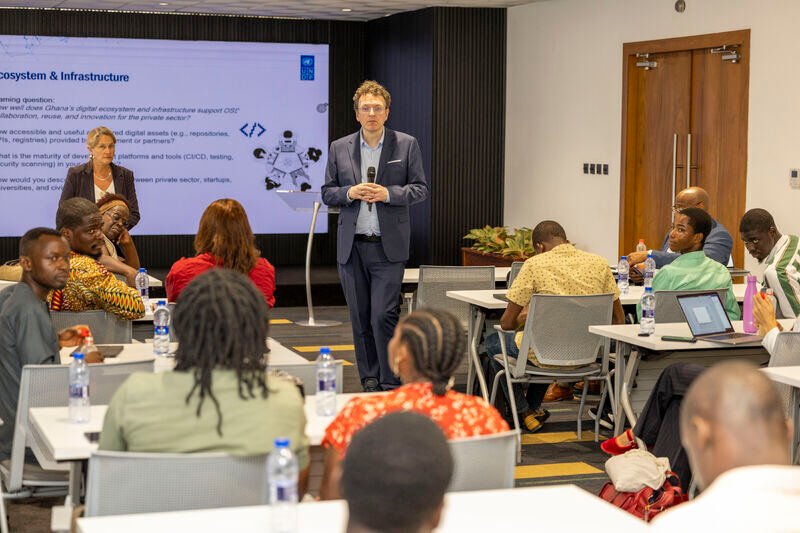
figure — open source software is commonplace. Many people use it without even knowing, whether for everyday web browsing or building tools to improve efficiency.
At its core, open-source software is built on code that is publicly available for anyone to use, adapt, and improve. It’s more complex, however, when a government sets out to adopt open source at scale to drive development impact. This discussion is happening in Ghana, where the Ministry of Communications, Digital Technology, and Innovation (MoCDTI) is undertaking an ambitious and deliberate digital reset to create more jobs, grow enterprises, and empower youth. This effort includes advancing more than a dozen legislative reforms at once, covering areas such as cybersecurity, data protection, electronic communications, data exchange and emerging technologies. Some are new legislation, while others replace existing laws. Together, they are redefining the country’s ICT legal framework. What does long-term sustainability look like in practice? Will the systems built on these foundations be open and auditable? Or will they end up trapped behind proprietary walls, with a limited number of vendors able to assess and support them? Governments pivot to open source adoption For governments and other large organizations, making a strategic shift towards adopting open source is a significant undertaking that presents both challenges and opportunities. A ministry might deploy an open-source tool for a particular project, however systems-wide questions on managing licensing compliance, building internal maintenance capacity and coordinating across other ministries within a government may be unanswered. As a result, this adoption of open source, whilst transformative in value, could remain in isolation–without ever becoming the institutional default. This is the gap the OSPO (Open Source Programme Office) model is designed to fill. OSPOs are a common setup in the private sector, providing structured governance for open The model is now increasingly being adopted by universities, civil society, and within the public sector that has underscored the need for readiness to ensure effective adoption. The Open Source Programme Office Readiness Assessment, known as OSPORA, is a UNDP-led initiative that does exactly this for countries.