He made your free video player run smoothly. Now he’s doing that for robots.
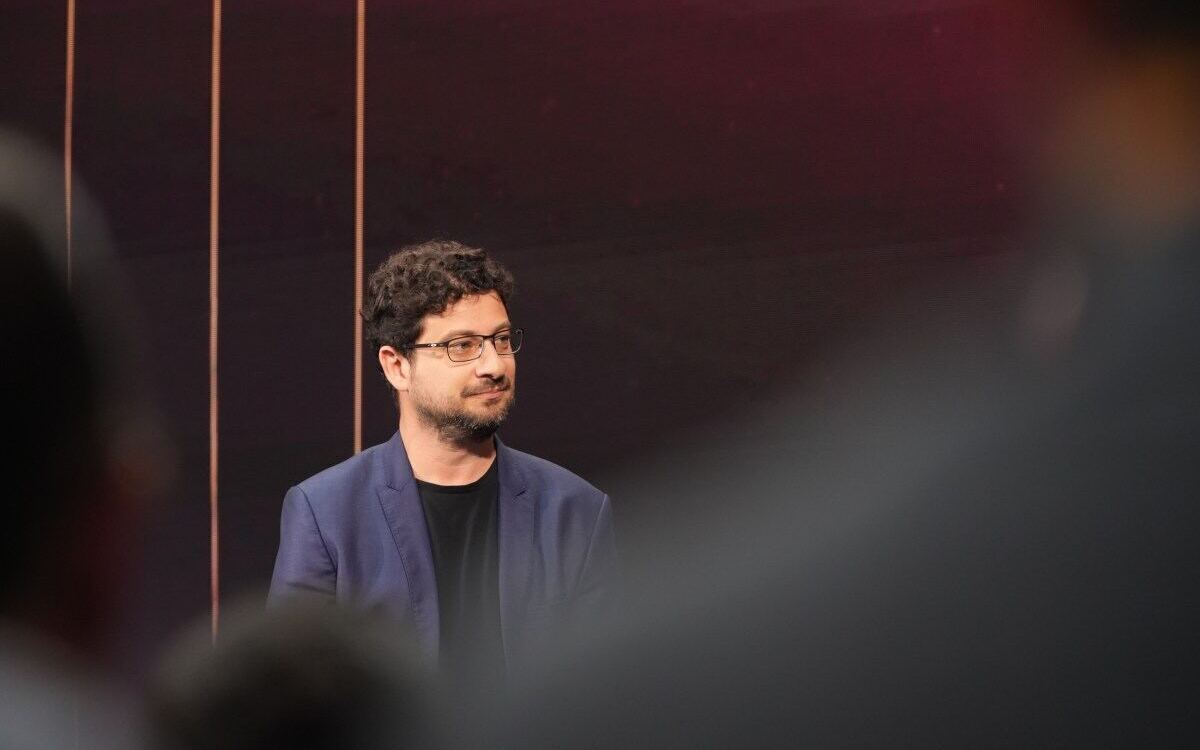
french serial entrepreneur and open-source legend Jean-Baptiste Kempf has been building Kyber, an infrastructure layer to control remote devices in real time.
Convinced that “hundreds of millions of robots and drones” will be roaming the streets in a few years, this French serial entrepreneur and open source legend has been building Kyber, an infrastructure layer for controlling remote devices in real time. Its core software is an SDK that synchronizes video, audio, sensor data, and control inputs with minimal latency. This lines up well with the rise of physical AI, and it’s part of why the Paris-based startup was able to raise a $5 million round led by Lightspeed, which has also backed Anthropic and Mistral AI. “Physical AI is only as good as the underlying systems running it,” the American VC firm wrote in a LinkedIn post announcing its investment. Kyber’s potential applications go well beyond AI, though. Kempf told TechCrunch the platform is built for “all the use cases where the person who’s operating is not in the same place as the compute, which is not in the same place as the action.” Remote control is one half of the equation; speed is the other — and it’s what inspired the startup’s name, a nod to the lightsaber crystals in Star Wars. “If you control things in the real world, every millisecond matters,” Kempf said. Kyber’s approach to eliminating lag is rooted firmly in video-streaming technology. The company started as a side project Kempf built while CTO at cloud gaming startup Shadow, and its early focus on streaming makes the VLC connection an easy one to draw. But IoT expertise matters just as much for optimization — tuning performance to a device’s available compute, at scale — the other core piece of what Kyber does. Kempf says other companies with the resources and the need have already built similar software for their own use cases, like remote driving. “But the largest fleets today have maybe 2,000 or 3,000 vehicles. Imagine you need to manage millions of them; that’s not the same thing.” That jump in scale also raises the stakes on observability — knowing systems are actually working will matter even more when AI agents, not people, are managing entire fleets and networks. Even at much smaller scale, though, there’s a real benefit: not needing to physically reach every device just to push a software update, for example. That range — from a handful of devices to millions — means Kyber’s user base will likely span far more companies than will ever become paying customers.