How GitHub maintains compliance for open source dependencies
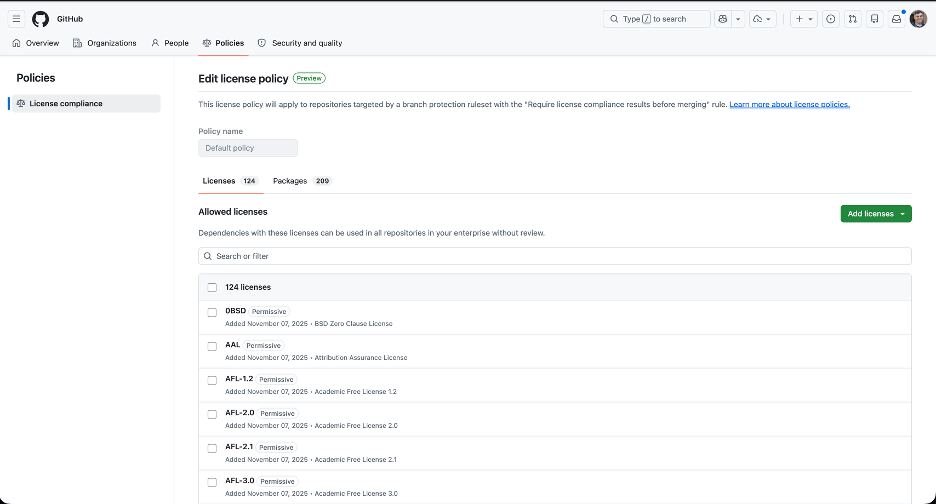
figure — every day, GitHub engineers introduce new dependencies into the GitHub platform, internal applications, and open source projects. GitHub is not just the home of open source; it is powered by open source!
And an important part of using open source responsibly is respecting the licenses that govern the projects you depend on. At GitHub, we are committed to upholding our obligations to the open source community and to the dependencies we use. Here’s how our Open Source Program Office (OSPO) uses the new GitHub License Compliance feature to manage thousands of dependencies. Managing the open source license compliance process Nearly all software carries some kind of license agreement. The license gives you permission to use a project, provided you comply with its obligations. Those obligations may be as simple as giving credit to the original author in your documentation, or they may require you to distribute all your source code when shipping your program. In some cases, licenses may also restrict certain activities or categories of use. Your organization likely has its own policies about acceptable licenses based on your business model, software ecosystem, and distribution strategy. For example, suppose your organization sells a commercial, closed source binary application. You may want to prevent dependencies that would require you to open source your proprietary code. Or, you may have a project that you plan to release as an open source package. In this case, you may want to avoid including dependencies governed by commercial or incompatible open source licenses. If you can’t comply with the obligations required in either scenario, you should avoid the dependency to prevent legal or operational risks. It may require engineering effort to remove these licenses after the fact. For enterprise software, the business risk of noncompliance is huge because it can lead to costly litigation and reputational damage.