onsemi Embedded Power Platform Announced
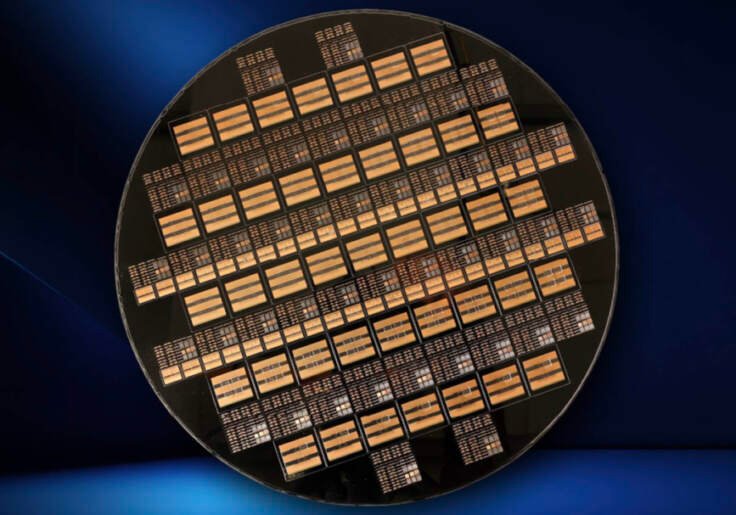
ServeTheHome — at its investor day today, onsemi is introducing the Embedded Power Platform (EPP), a power-integration approach that embeds heterogeneous power dies into silicon and connects them through wafer-level redistribution layers instead of wire bonds. onsemi is positioning EPP for vehicle electrification and AI power infrastructure, where power density has become a hard constraint and the traditional practice of optimizing electrical, thermal, and mechanical design separately has run out of room.
Subaru has signed on as the first strategic technology engagement partner and will receive early access to engineering samples and simulation models. While that is the automotive side, it sounds like the first major use case will be targeting 800V DC AI racks. As a fun aside, onsemi’s headquarters is about 10 minutes from STH’s studio. onsemi frames the launch around power density. AI, automotive, and industrial markets are demanding more power in less space, and designers must improve efficiency while managing heat, size, and cost at the same time. When electrical, mechanical, and thermal systems are tuned separately, improvements in one area create trade-offs elsewhere and force costly late-stage design changes. This is something that onsemi reiterated on a call with us. EPP is built around a silicon embedded package. Heterogeneous power dies sit directly in silicon and connect through wafer-level redistribution layers, replacing wire-bonded interconnects. Rather than treating electrical, mechanical, and thermal behavior as separate problems, EPP co-develops them from the outset. onsemi says the platform is technology-agnostic and scales across semiconductor materials and power levels. Under the hood, wafer-level metallization replaces wire bonds with precision redistribution layers, bringing semiconductor-fab precision to the interconnects and lowering parasitic inductance for better device control and higher switching frequencies. onsemi supports silicon, SiC, GaN, and future technologies in configurable power-device combinations, and it integrates drivers and controllers directly with the power devices to reduce system-level complexity. Its silicon-based package builds on proven fab (in upstate NY, not far from where we did our IBM Z17 video last year) and simulation infrastructure, which onsemi says shortens time to market and provides high-voltage isolation along with a lower-resistance thermal path. onsemi highlights thermal and electrical gains.